
Micronecta minutissima is commonly associated with slow-flowing shallow water over a bottom of pebbles or mud with fairly sparse vegetation. (Kirby, 1992). It can be in larger fast flowing waters but prefers the quiet, flat, sandy-gravel, vegetation free bank area (Strauss&Niedringhaus, 2014). It is thought to be a migrant in the UK that can build populations quickly as it has has been found in abundance one year and not for many years since.
They are probably generalised feeders on algae, bottom detritus and small organisms.
There are two generations a year. Nymphs overwinter and mature in late spring. These then breed again in late August laying eggs on the edges of leaves of aquatic plants. (Kirby, 1992)
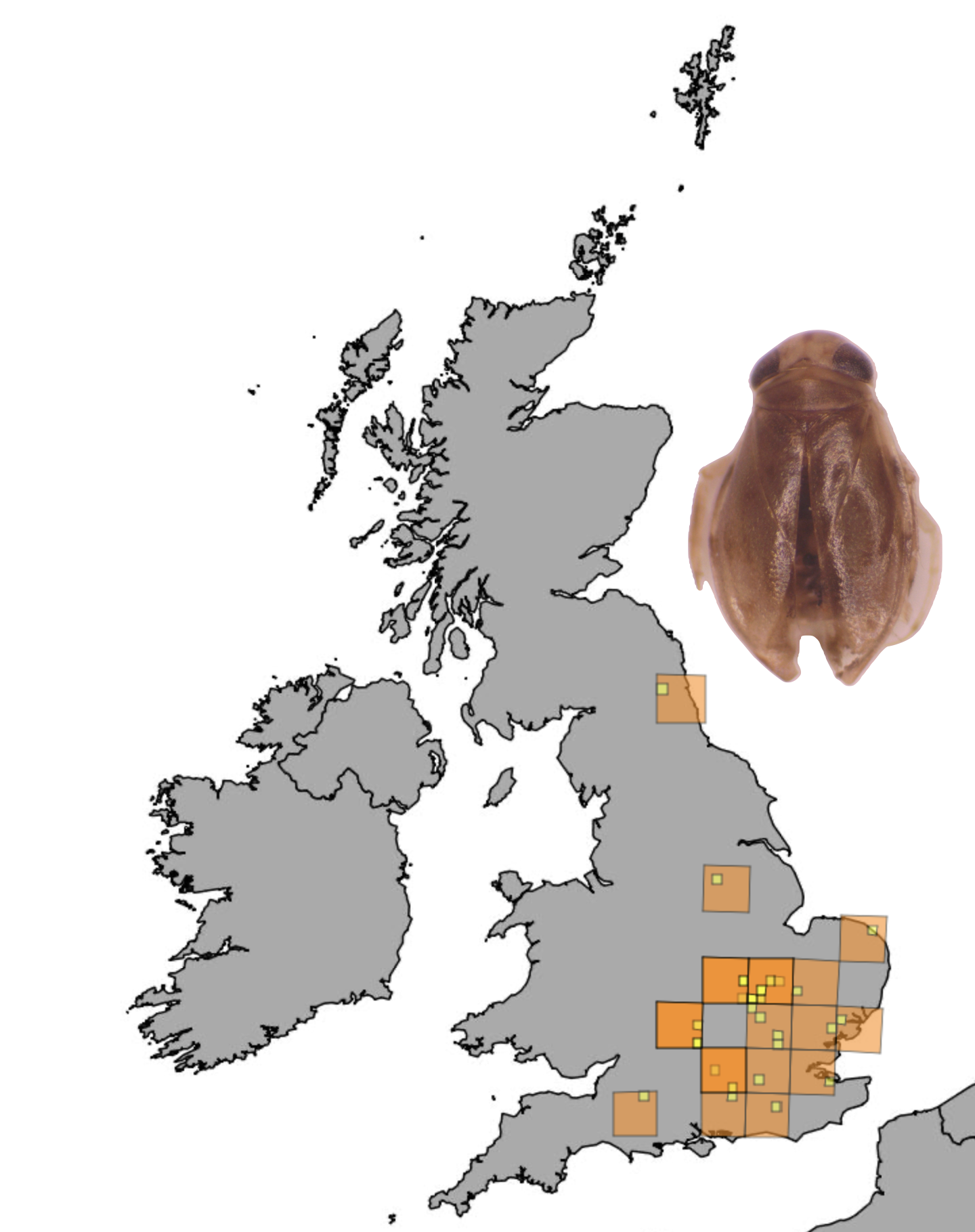
Distribution
The map is taken from NBN Gateway and shows 10km squares in yellow and 50km coverage for all UK records. Micronecta minutissima is widely distributed in rivers across England but yet to be recorded in Wales, Scotland or Northern Ireland.
Identification
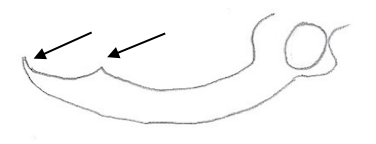
At 1.7mm to 2.2mm this is only slightly larger than Micronecta griseola and needs to be disected to see the right male clasper which has a distinct triangular lobe on the inner margin and the apex tapered.
 Aquatic Bugs