
Water Bugs Summary
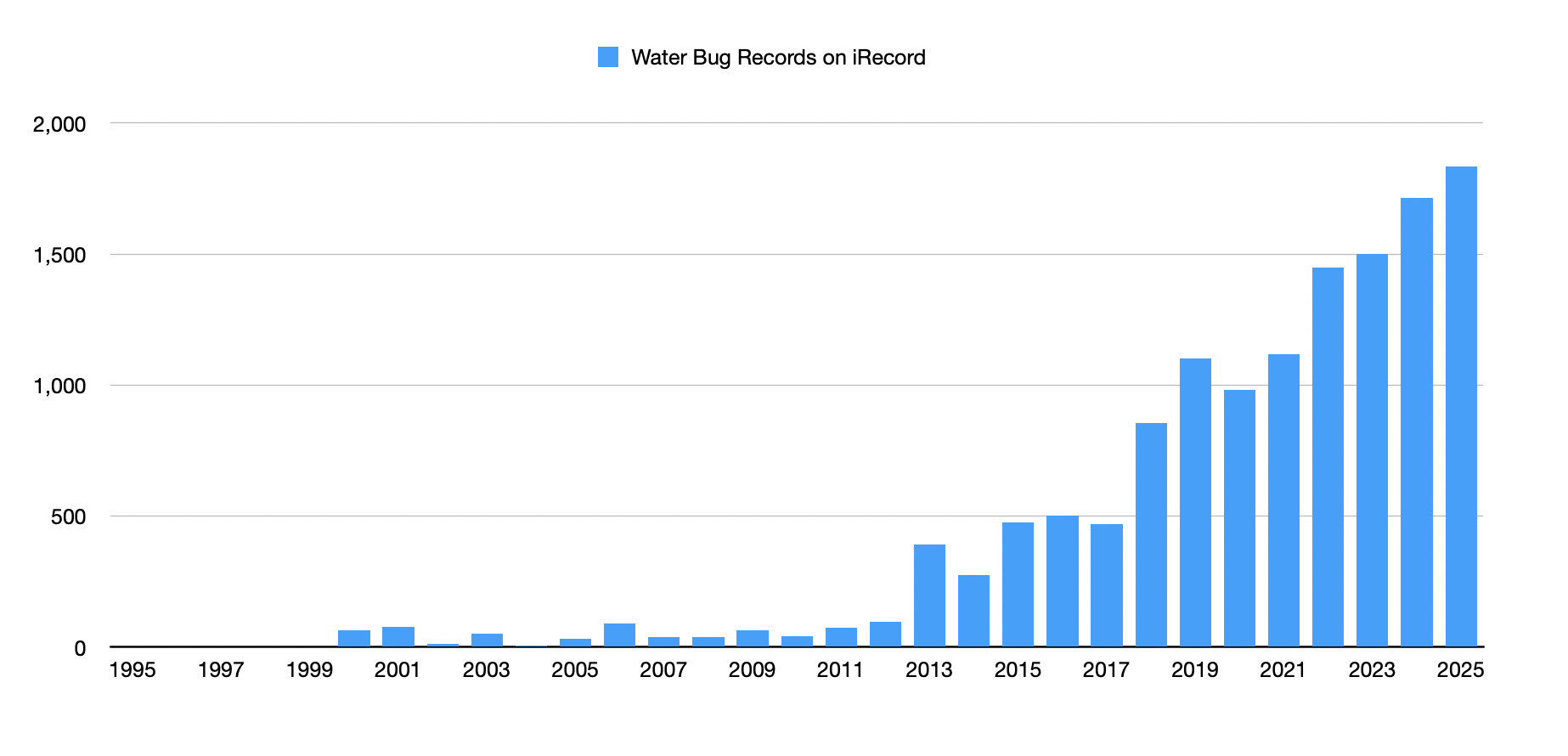
In 2025 we had 1834 records on iRecord added to the database as either Correct or Considered Correct. This was compared to 1714 in 2024 (although last year i included some plausible by mistake) and 1500 in 2023. There were records for 70 of the 96 species in the group and 31 species that had more than 10 records. 19 of the recorders submitted over 10 records in the year.
Of the 1834 records, 49 (2.6%) were just at Family level, 145 (7.9%) at Genus level and 1640 (89.5%) at species level. The Family/Genus level are mainly from casual recorders only able to id at this level or Photographers where the id may not be possible from a photo. This has reduced by half this year which i am hoping that we are turning more id into species level. From the graph below we are still slowly building. My target is still 3,600 a year which the recording scheme was attracting at it’s hight in the early 2000’s – half way there now!
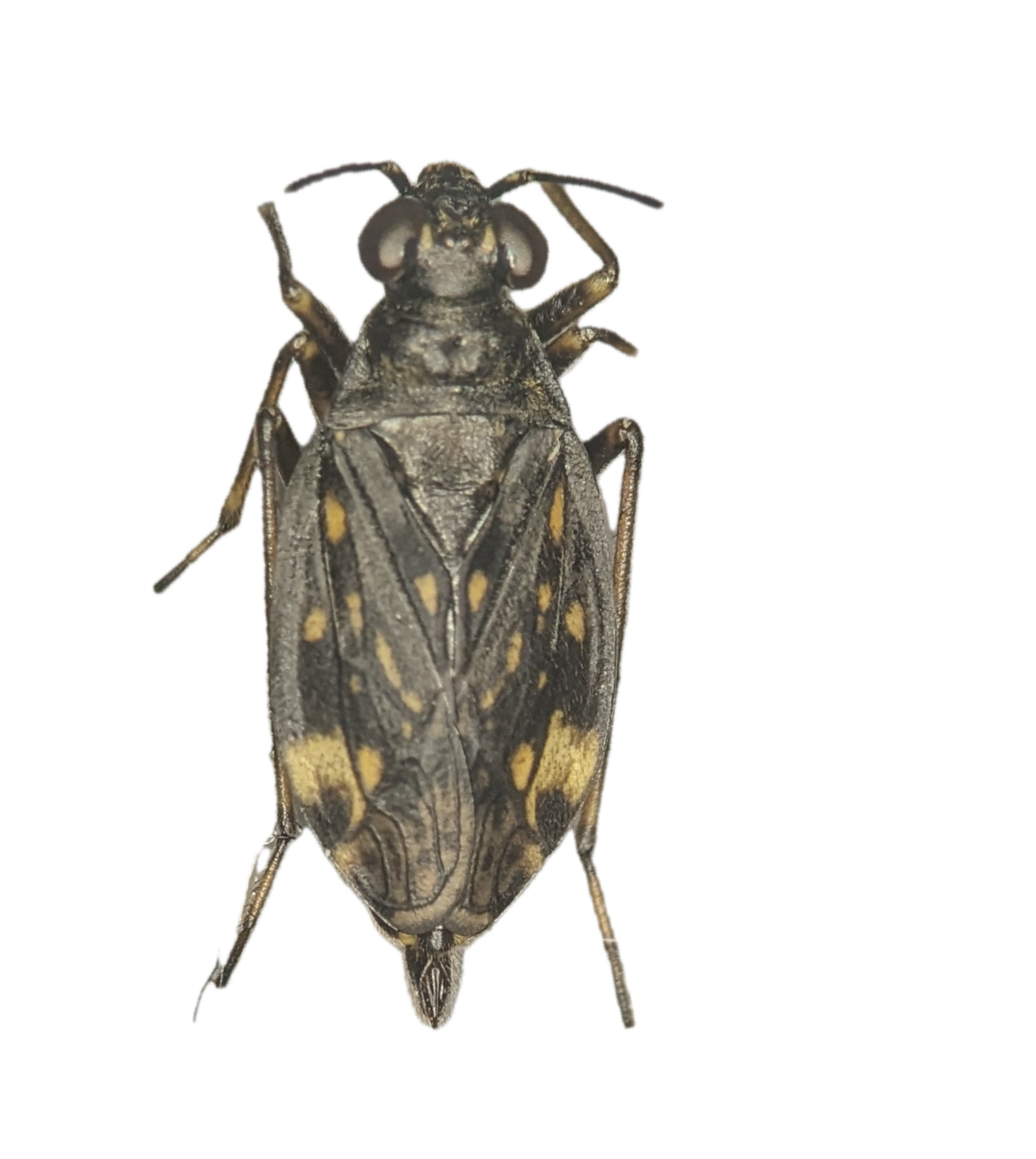
Teloleuca pellucens c.Lydia Cox.
Input date – All Recording Scheme records 1994 to 2025
This year we have seen a number of rarer species records. Teluleuca pellucens as seen above was recorded for the first time in 30 years from the Cairngorms. This seems to have reduced into difficult areas to access, hopefully it will remain in those areas. We had a new sighting for Sigara longipalis, only the second, this time in Suffolk in a small new pond. This is a migrant species from Europe and would be great if it could establish over here. Naucoris maculatus appears to have been increasing its range and samples were found in good numbers at RSPB Dungerness and Lydd Ranges just along from the two ponds it has only been known from.
We had records for Micronecta griseola and Micronecta minutissima this year that were found from an existing known site. Plea minutissima and Ilyocoris cimicoides were also found in a pond in the City of Edinburgh as they extend their range even further into Scotland. Sigara iactans has been expanding it’s range too and with specimens this year found on Anglesey, i expect it has reached the west coast now.
Saldula palustris had a good year with 15 records as did Chiloxanthus pilosus with 4 records and Halosalda lateralis with 5.
I have done a summary and a map (from iRecord) of the species for everyone where we had more than 10 records. I have ordered them alphabetically.
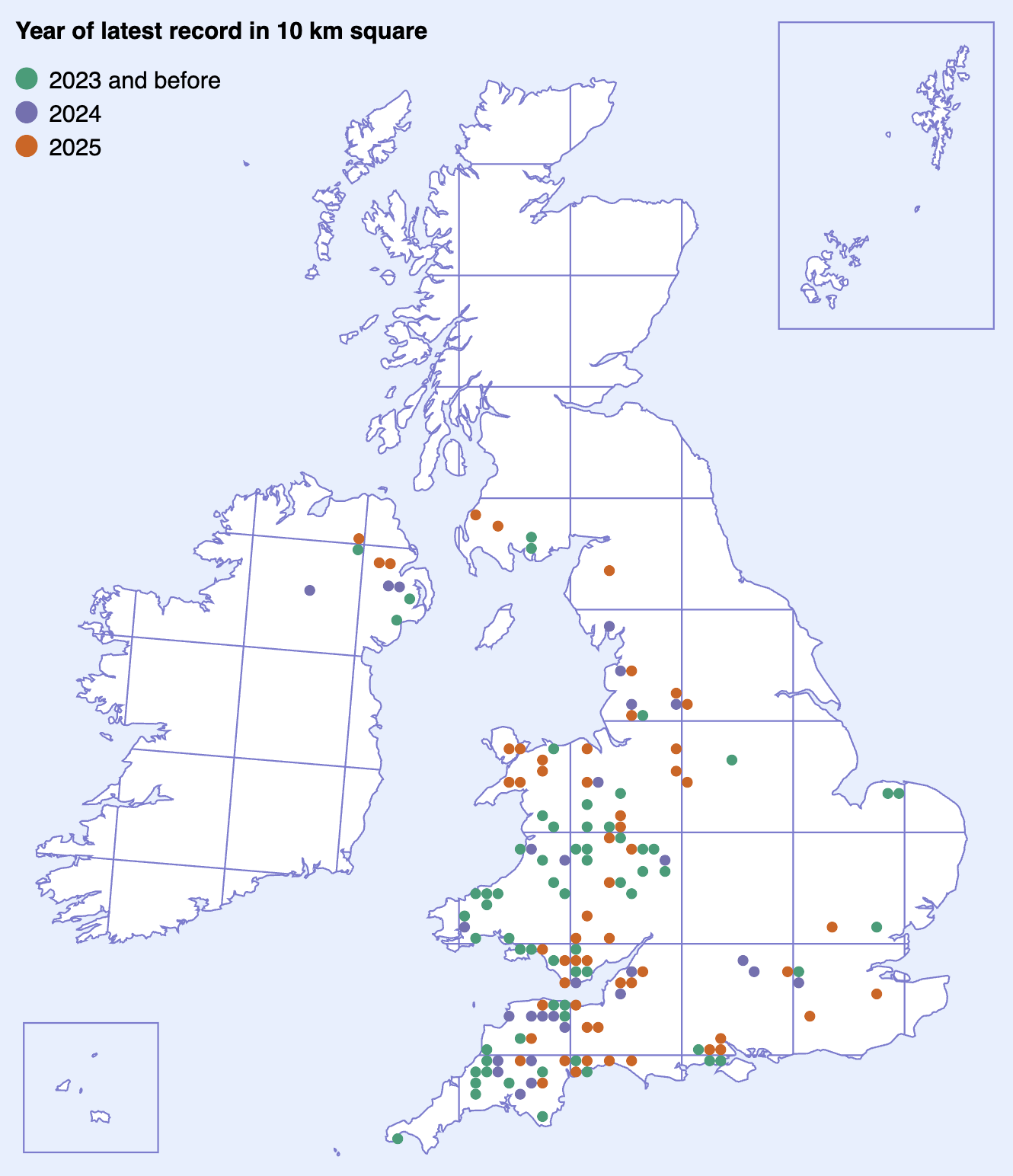
Aquarius najas
There were 66 records this year up from 37 last year and an increase for the last 4 years. This is not really changing is range though, mainly because it prefers the large rivers but it is getting noticed and photographed more which is great for the scheme.
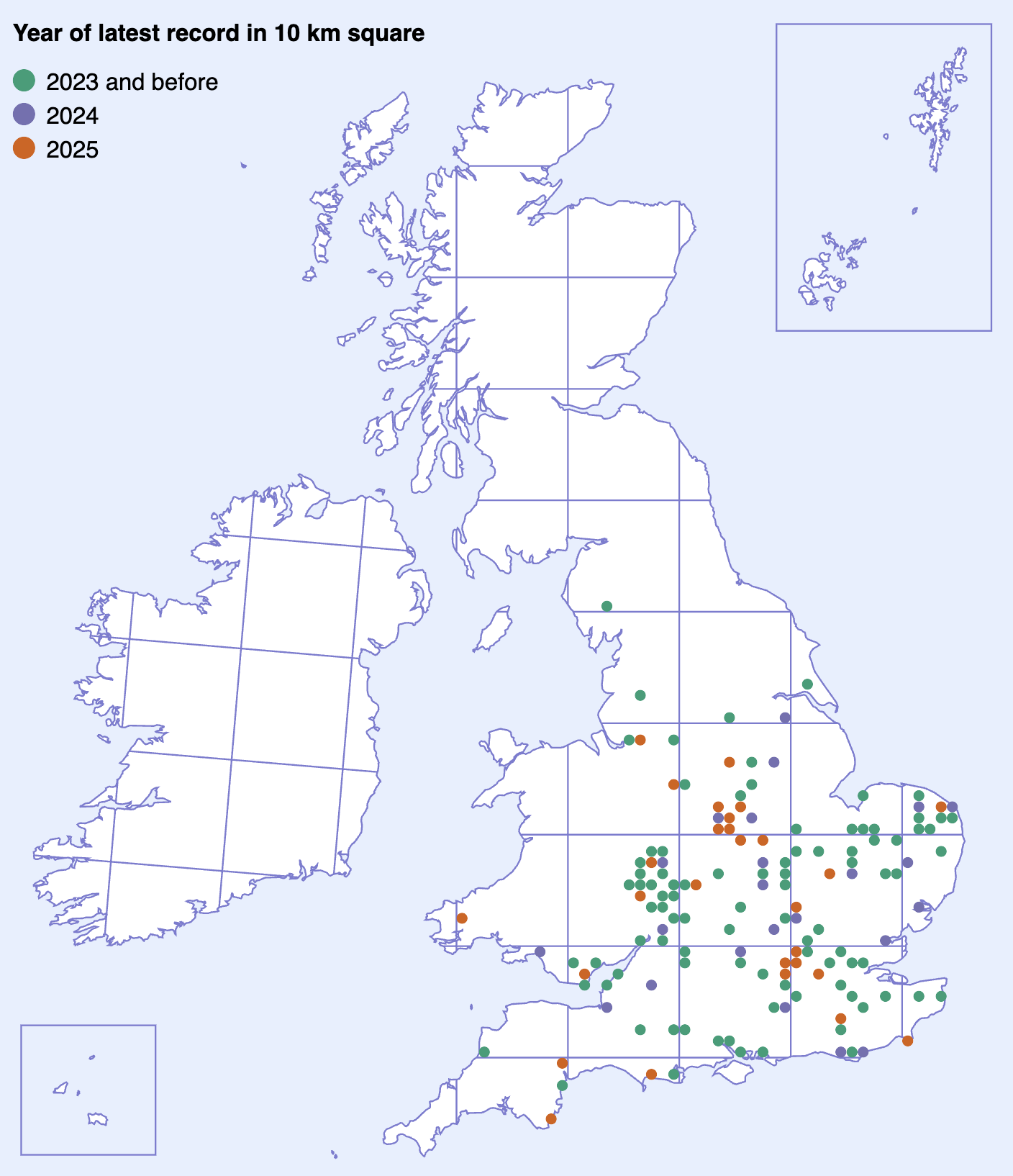
Aquarius paludum
There were 27 records this year of which the majority were within it’s range. Up to 2022 this was spreading North and Westwards but this has not been seen again this year.
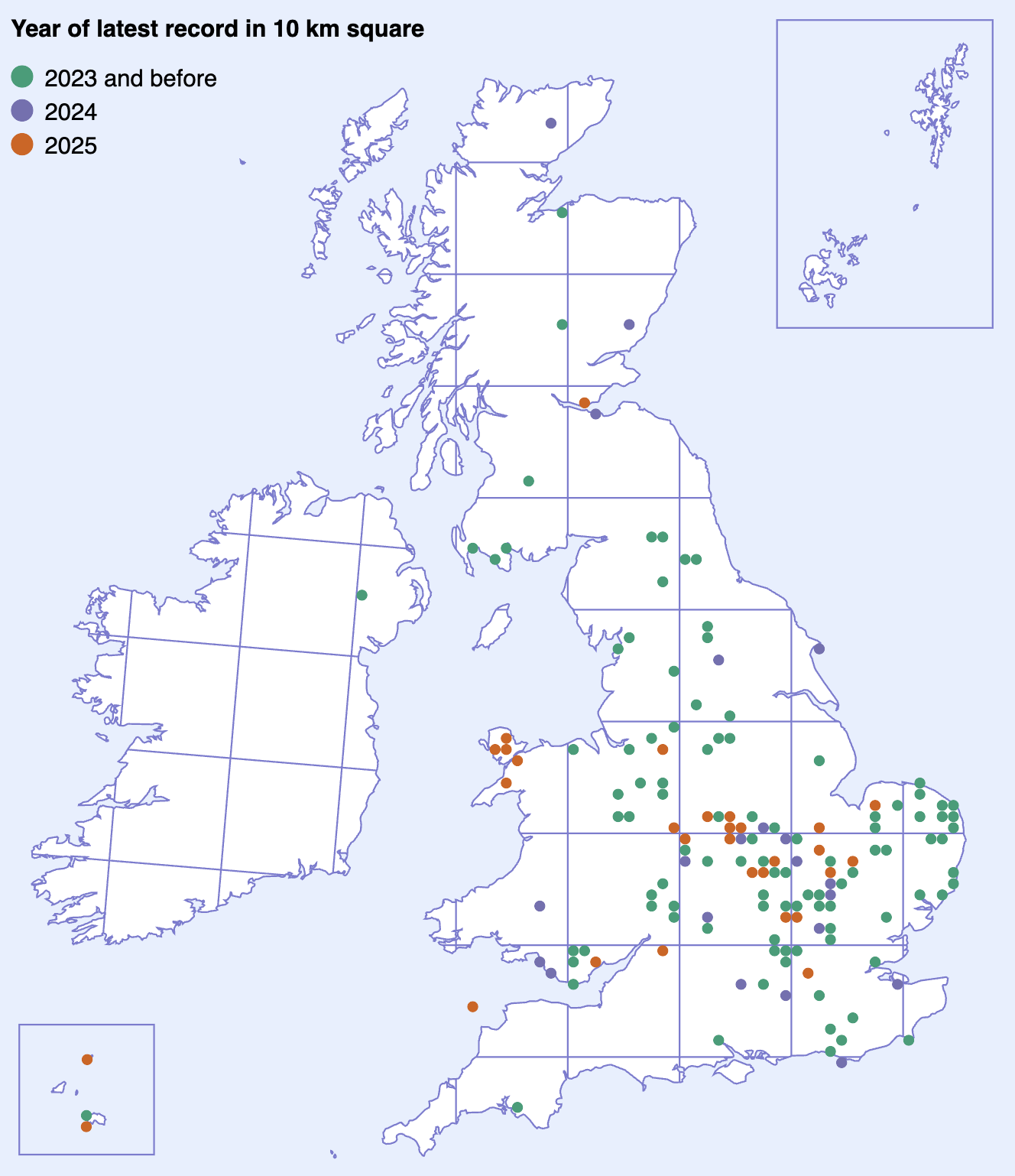
Callicorixa praeusta
There were 47 records this year which was up on last year. This is distributed across the UK and we have added more North Wales records this year.
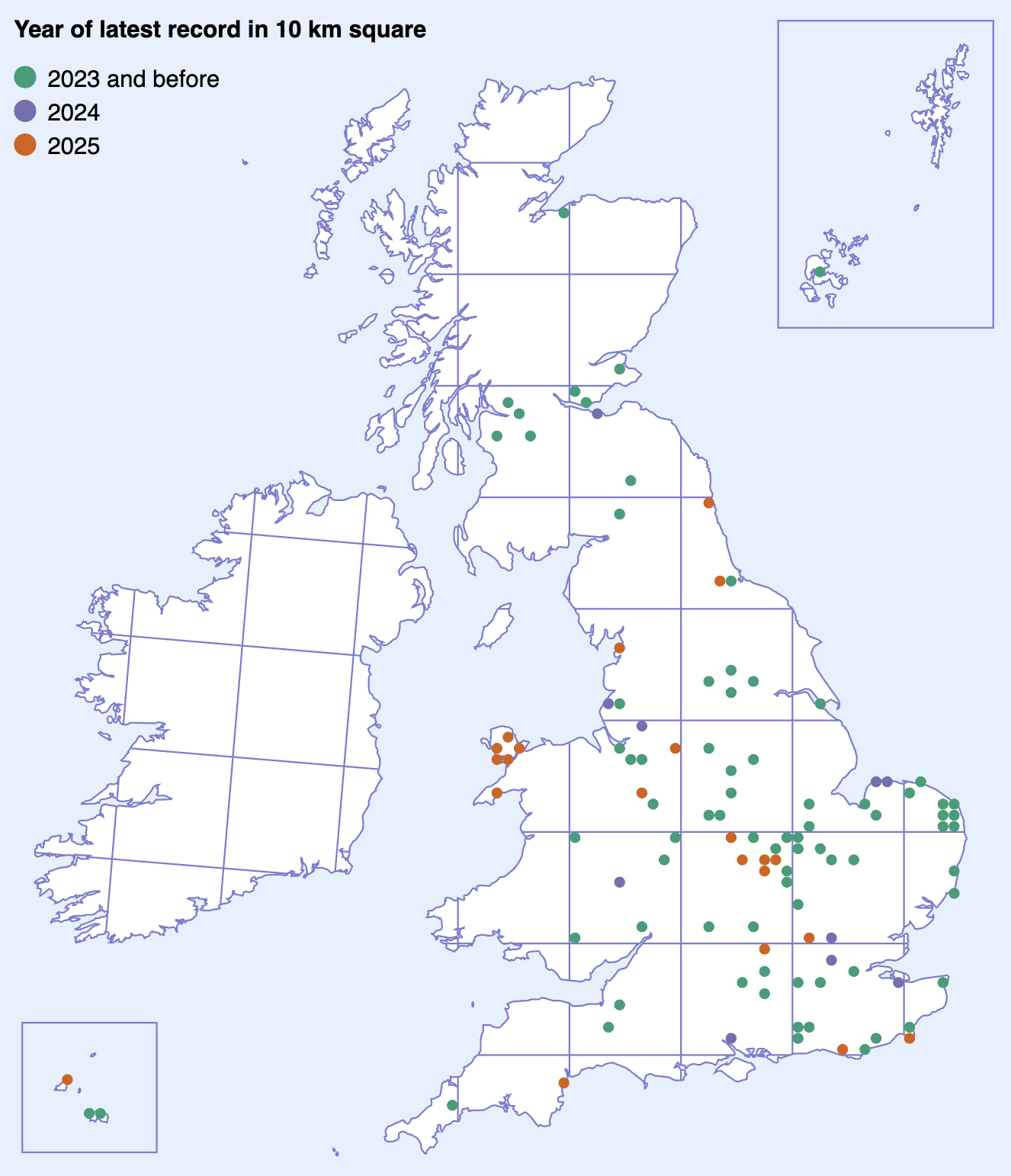
Chartoscirta cincta
There were 25 records this year which is slightly up on previous years. Records were spread across England and Wales with a good number of records from North Wales this year.
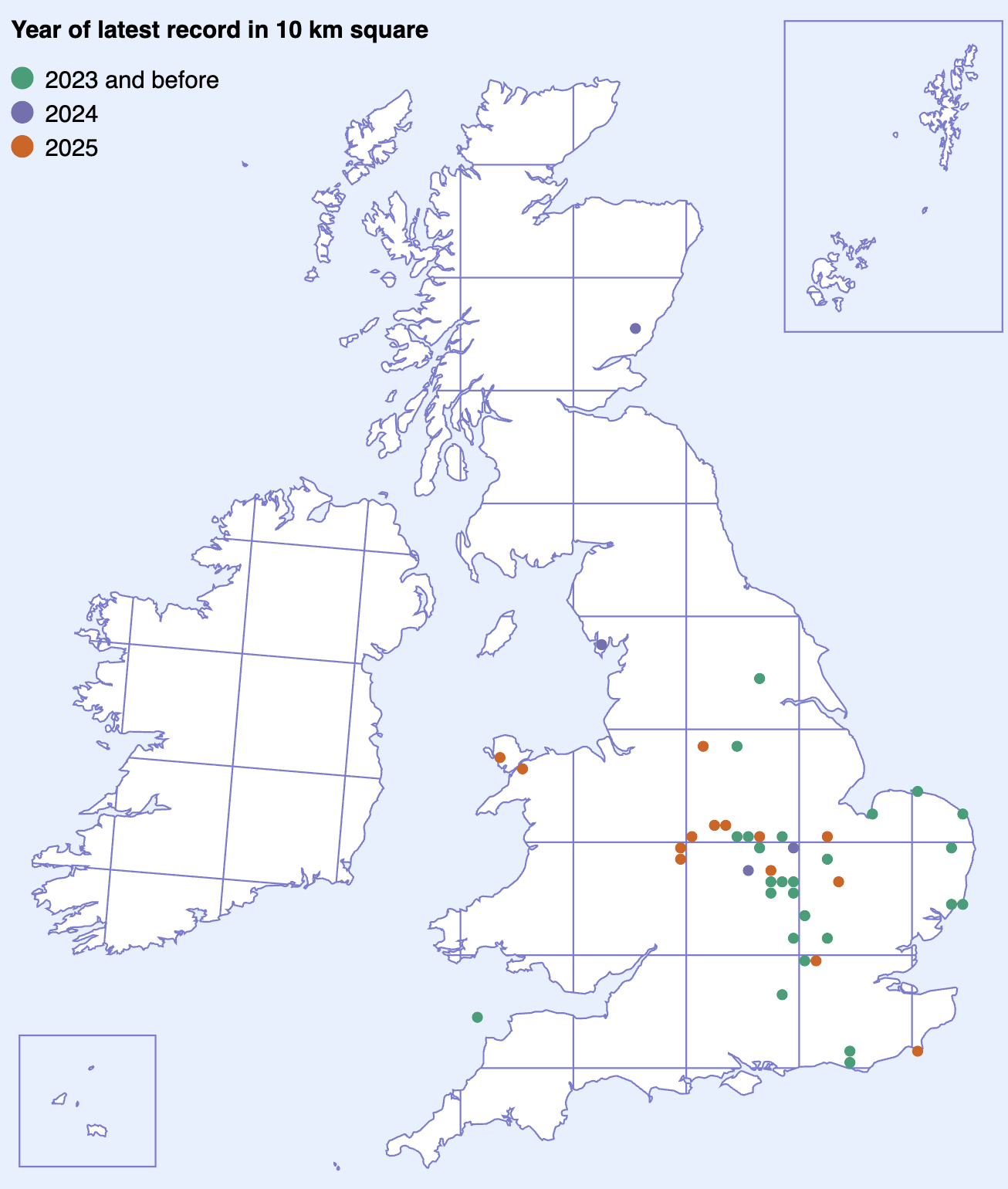
Corixa panzeri
There were 23 records this year which is up on previous years. It still represents the species distribution but widening on iRecord.
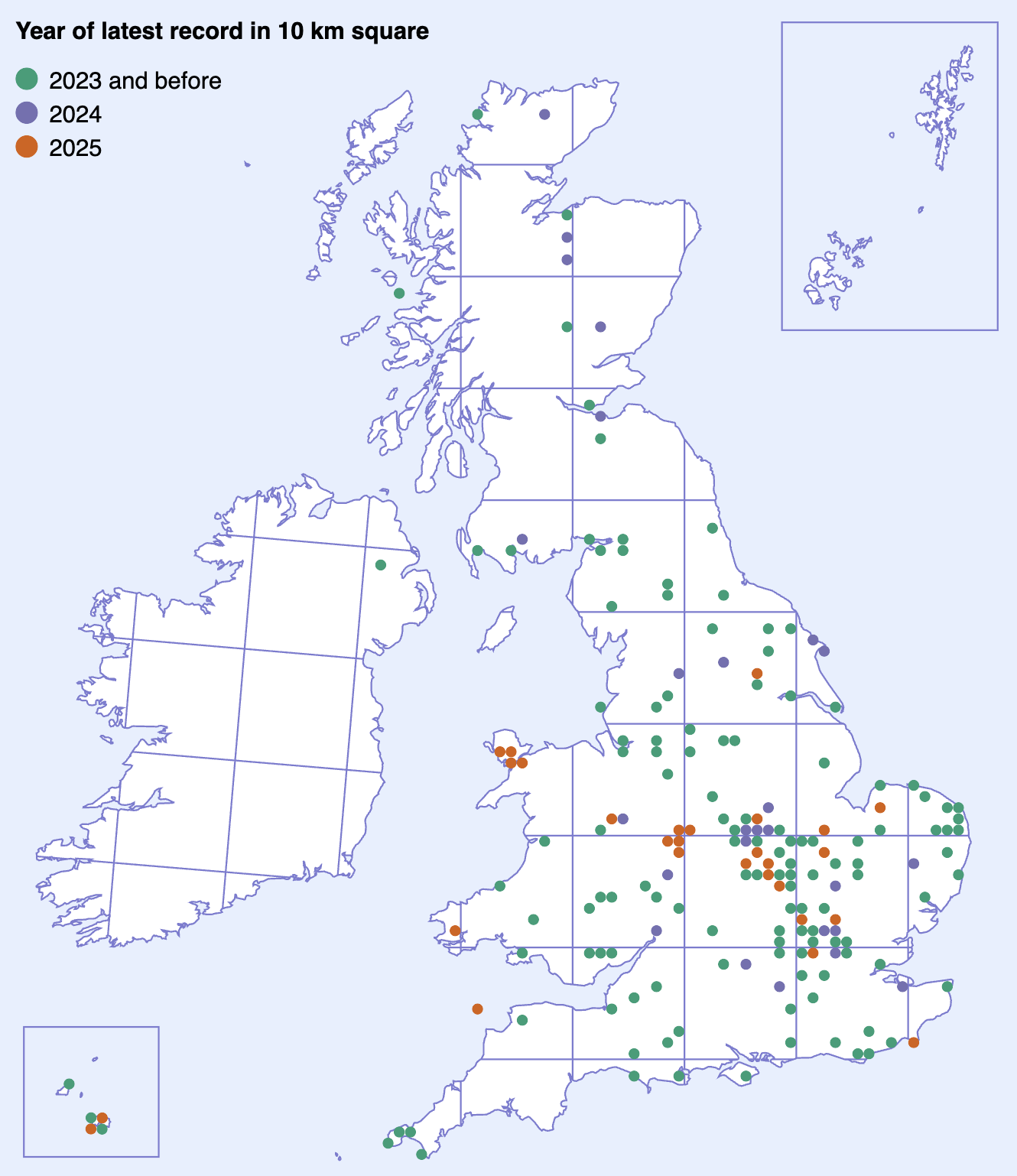
Corixa punctata
There were 40 records this year which is the most in one year on iRecord. There were a number of records from Anglesey and the Midlands which just represents recording efforts.
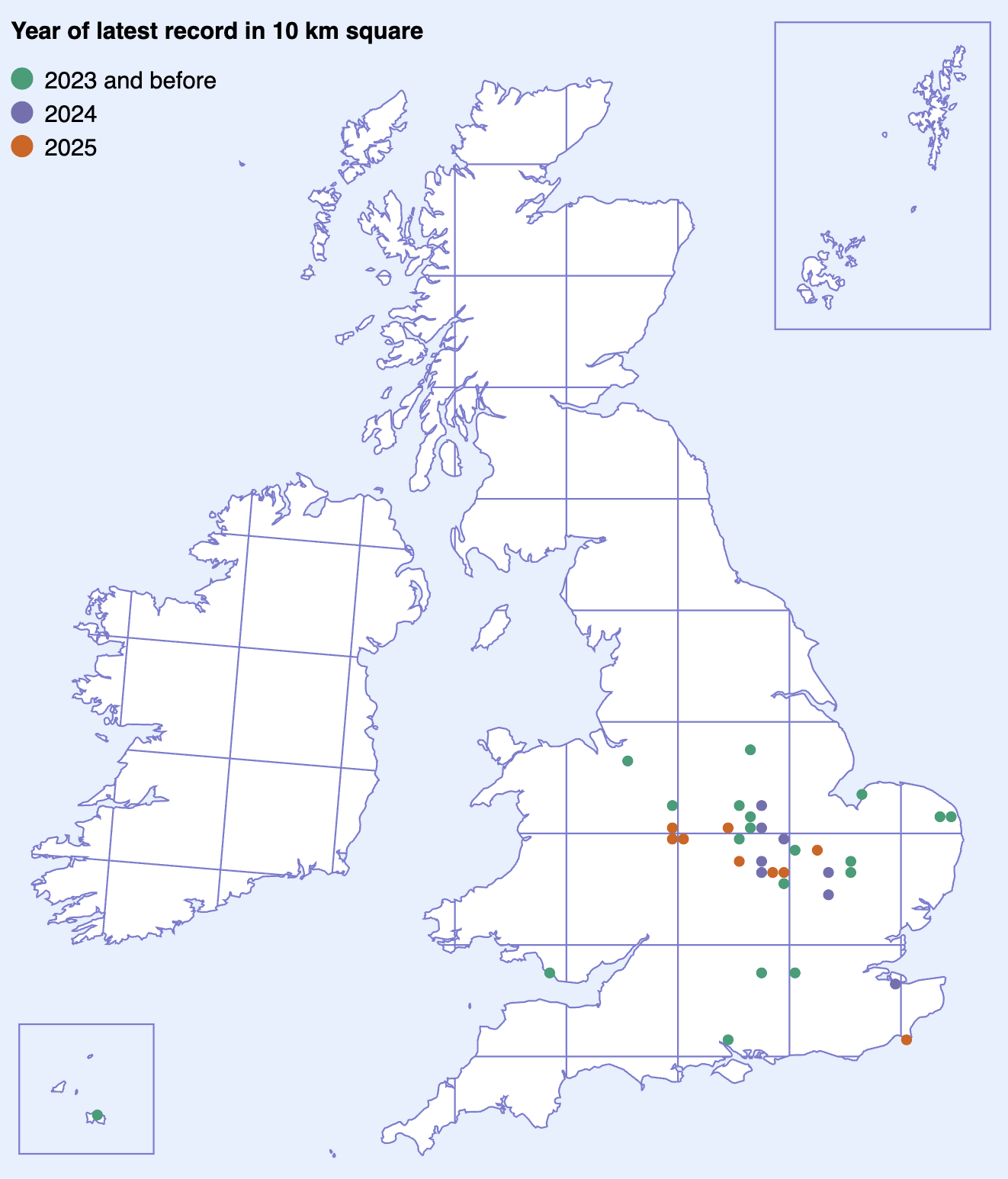
Cymatia coleoptera
There were 16 records this year, which was the same as last year. This is very slowly spreading West and Northwards but all the records this year were in known range.

Gerris argentatus
There were 11 records this year up from last year. All of the records are within range but nice to add a few more southern records this year.
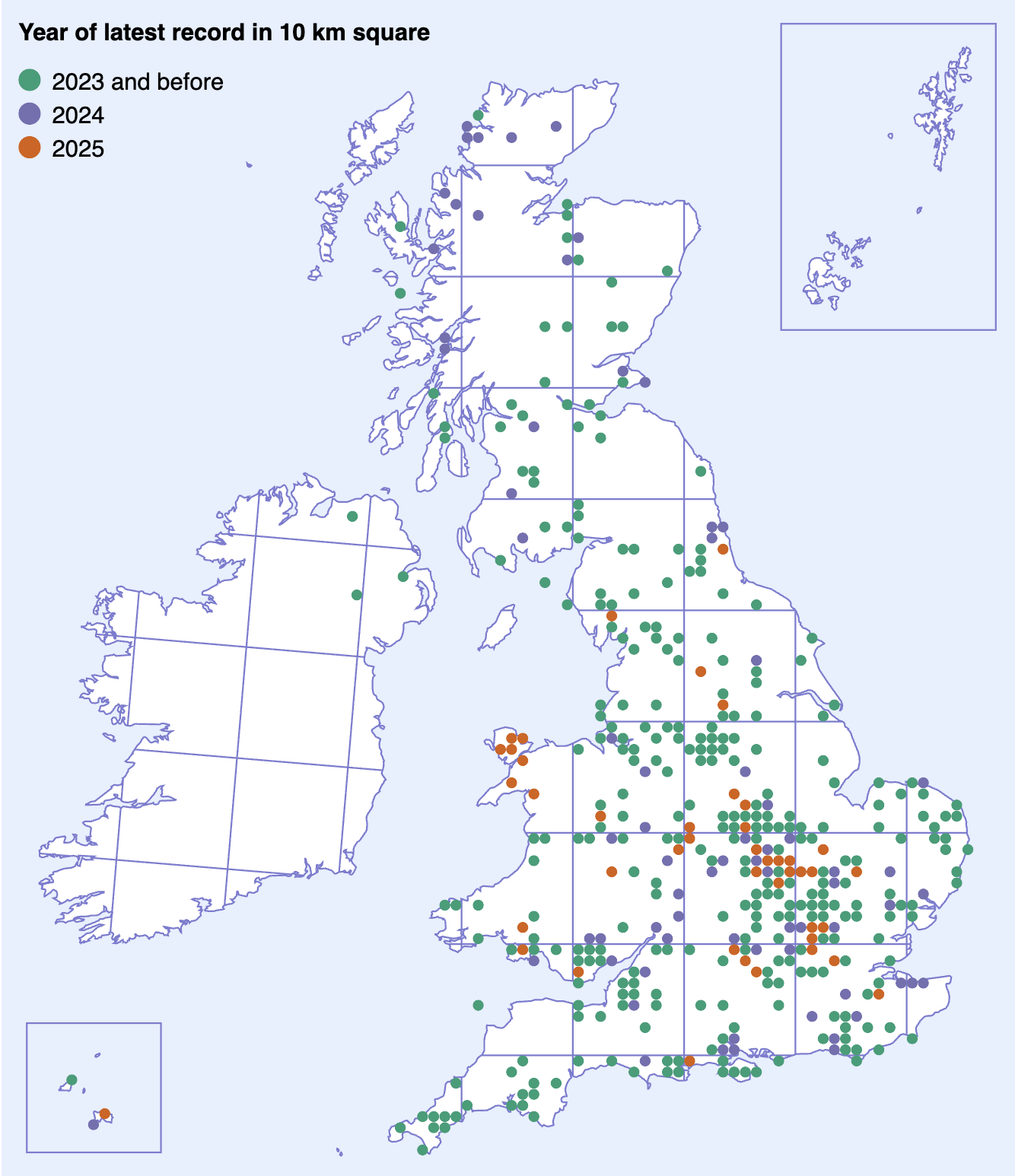
Gerris lacustris
There were 68 records this year and slightly down on last year, perhaps because the id is getting a bit better and the records are spread more around the other gerris species. The distribution is widespread across the UK.
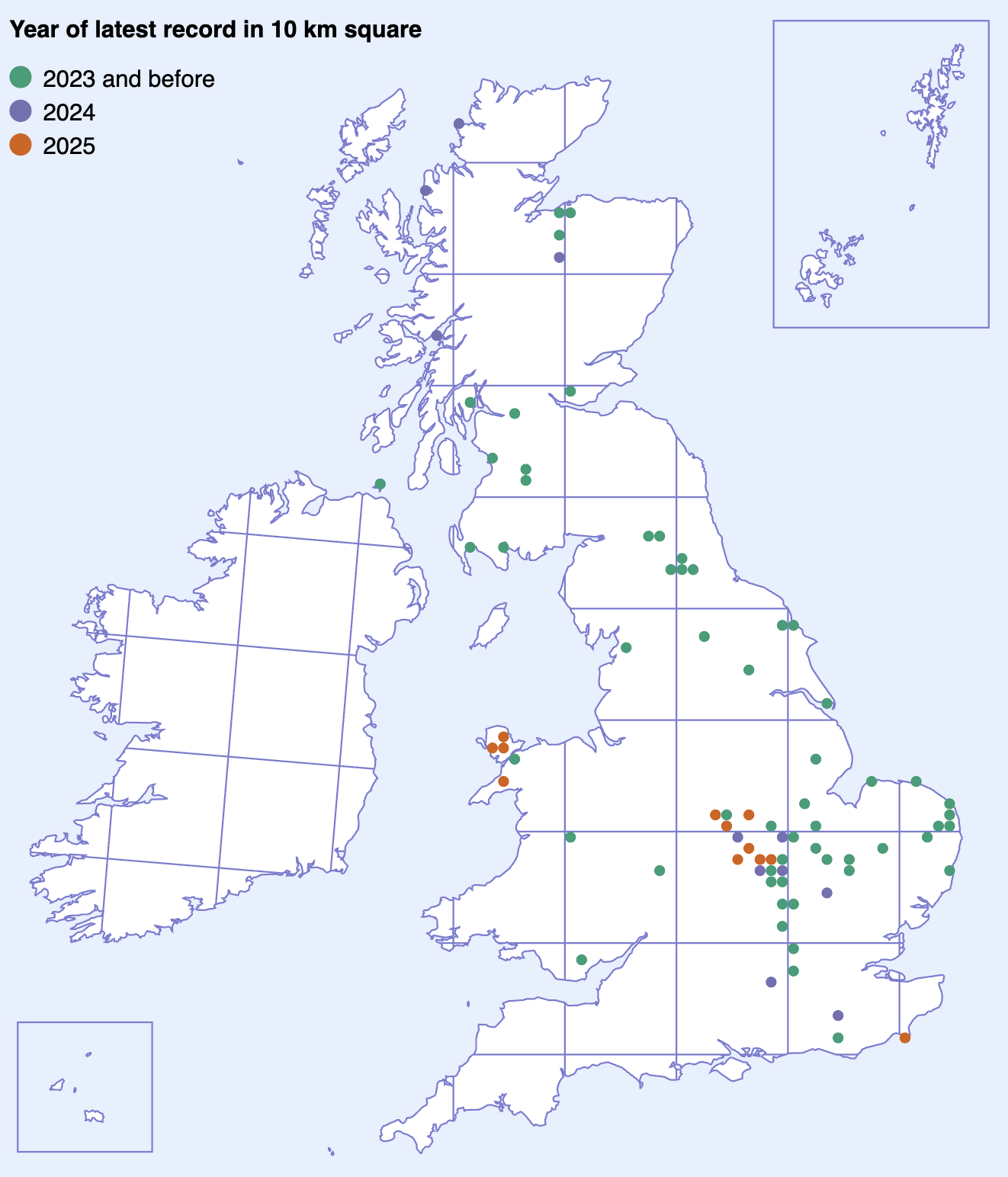
Gerris odontogaster
There were 25 records this year and the distribution shows more expert recording areas. I am surprised there are not more records as it is easier to identify than Gerris lacustris.

Hesperocorixa linnaei
There were 35 records this year that is slightly up on the last few years. A few more on Anglesey just representing the recording as they are across most of the UK.
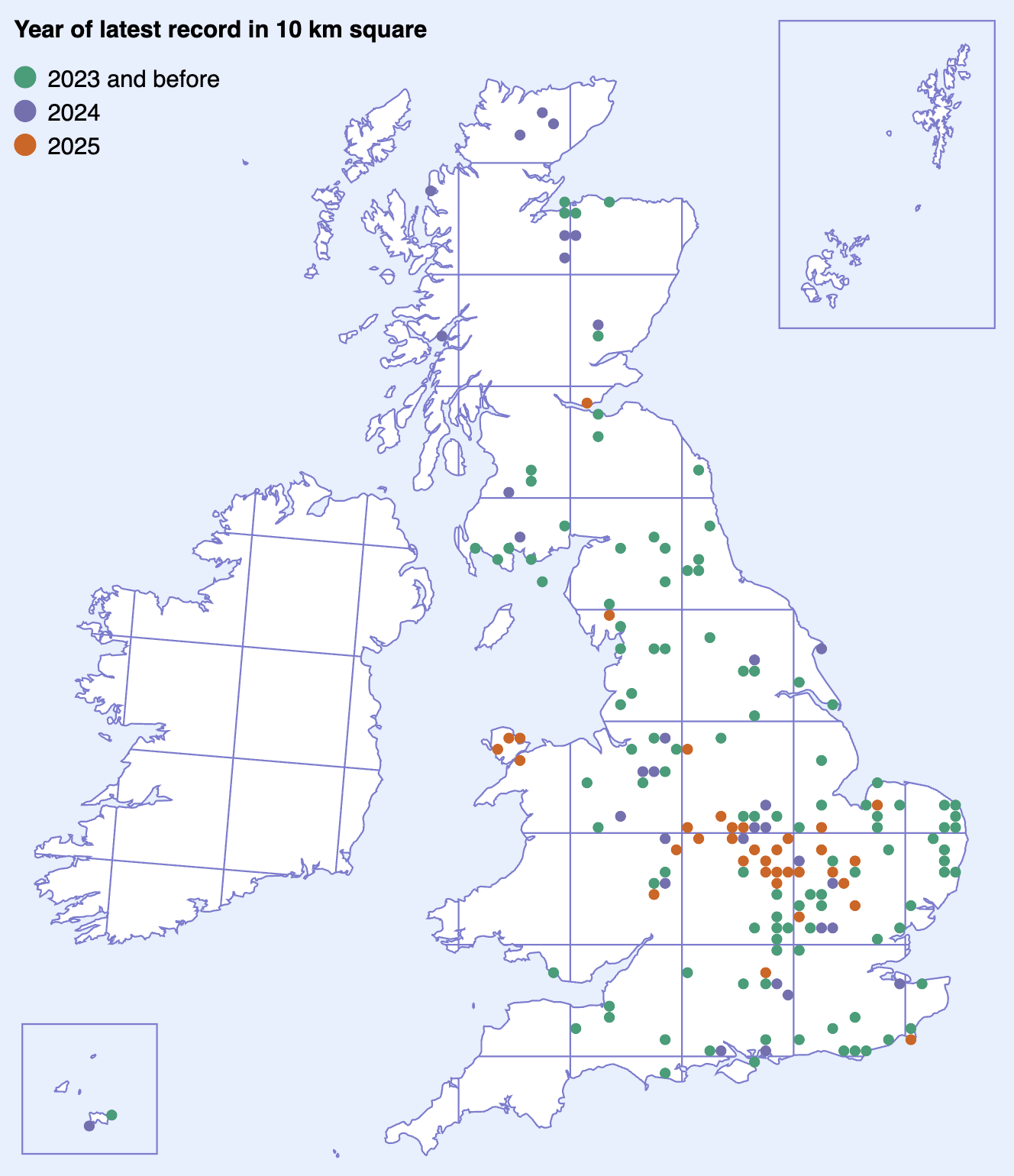
Hesperocorixa sahlbergi
There were 62 records this year more than any other year on iRecord. This is all over the UK so the records do not affect the range but are building nicely.
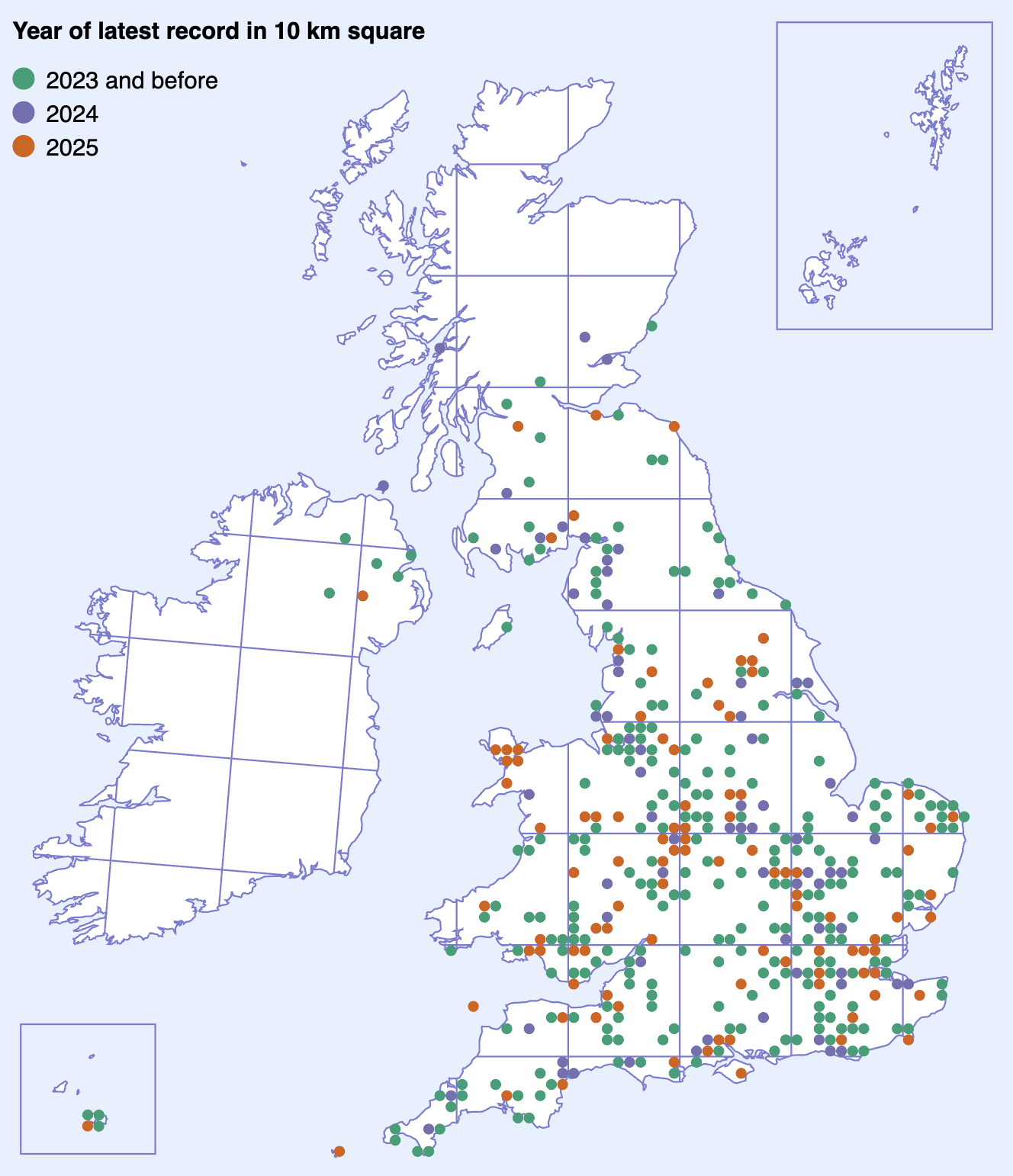
Hydrometra stagnorum
There were 132 records this year which was the third highest recorded and with records increasing every year since 2011. This is slowly spreading North east wards and there were more Scottish records this year.
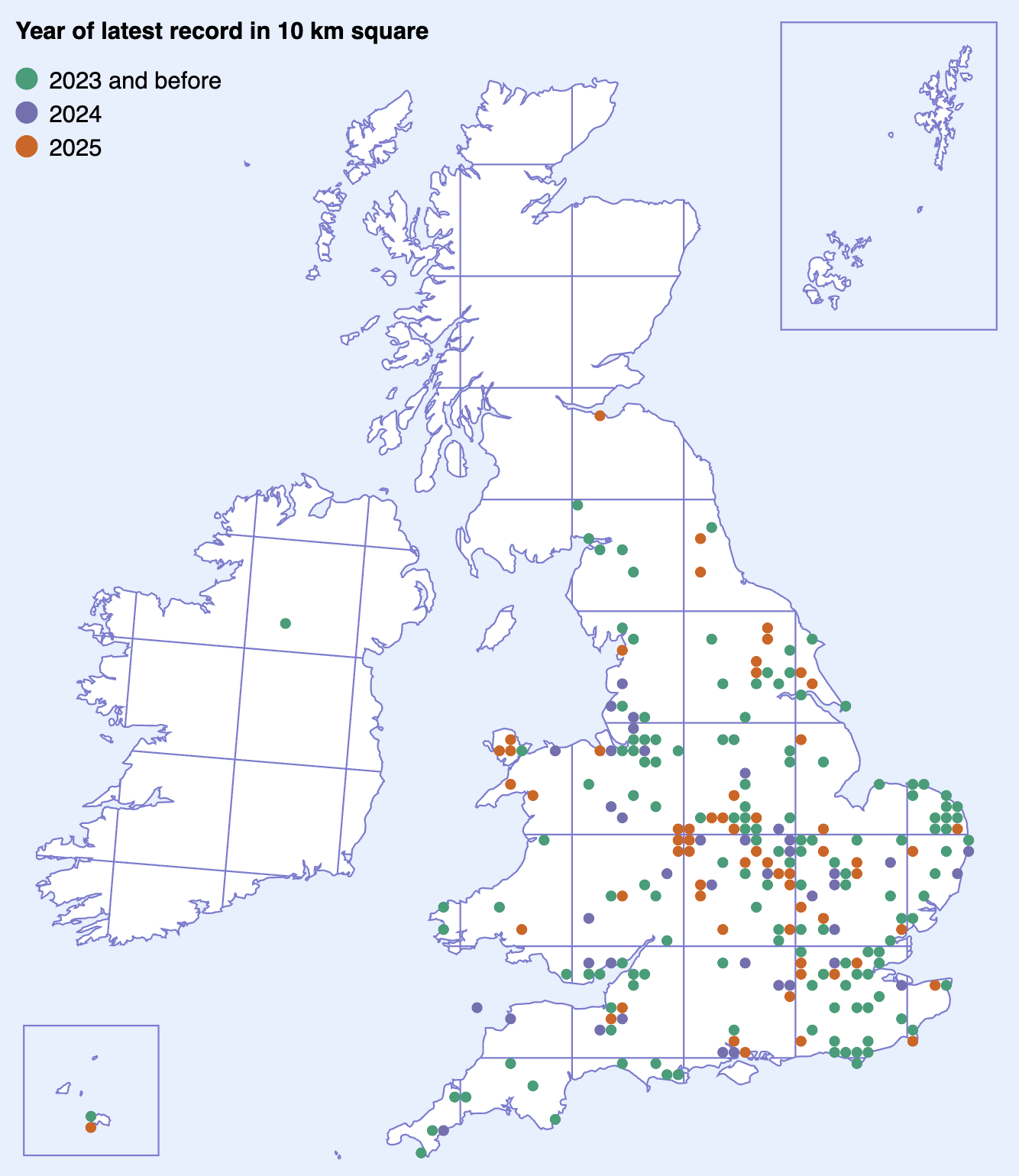
Ilyocoris cimicoides
There were 109 records this year and more than last year. This still seems to be making its way West and North with quite a few records from West Wales this year and a record from a pond in the City of Edinburgh which is quite a jump in it’s northern range.
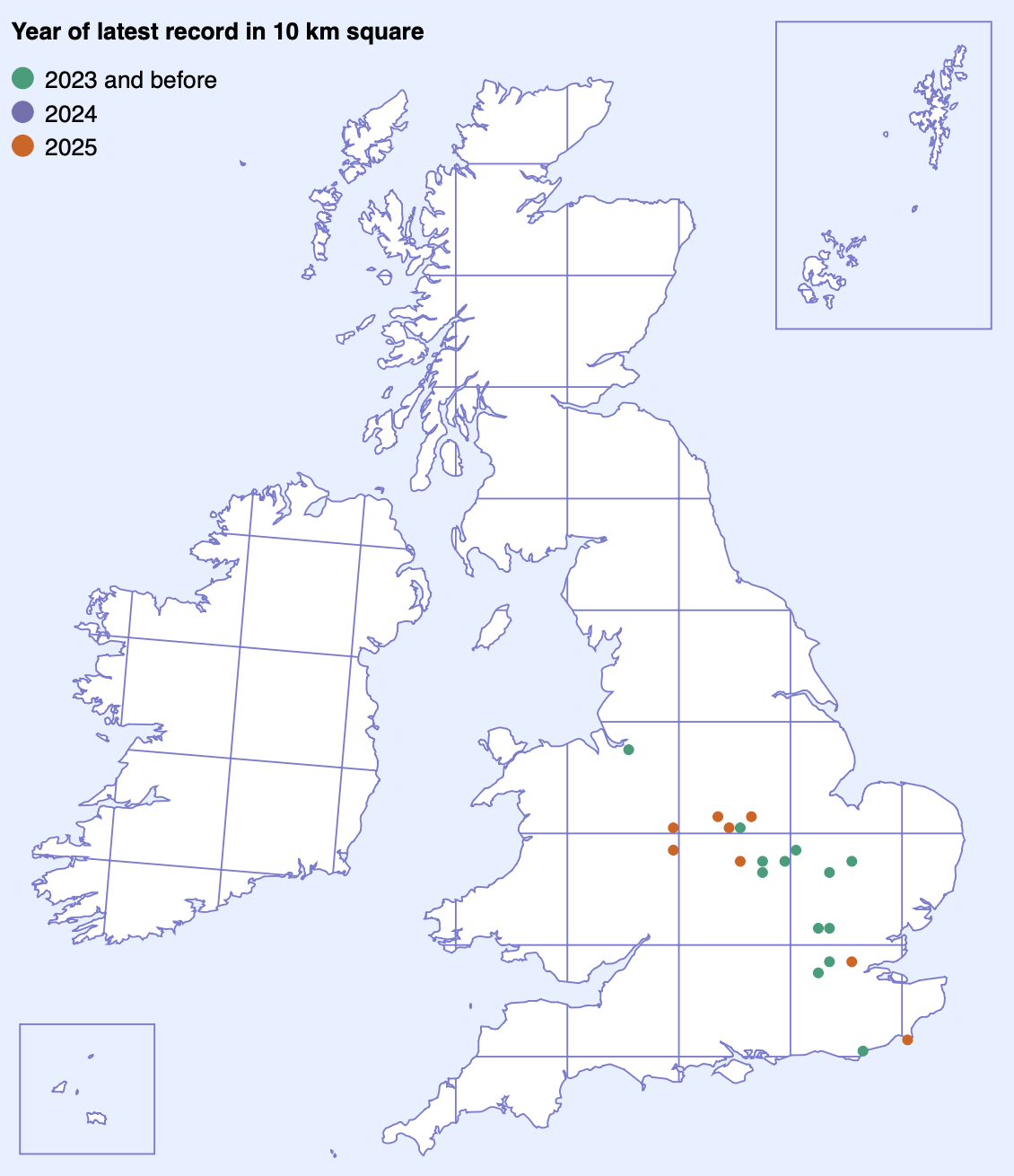
Mesovelia furcata
There were 10 records this year and the most there have been. It also seems to be very slowly pushing it’s distribution westwards with two records from Staffordshire this year.
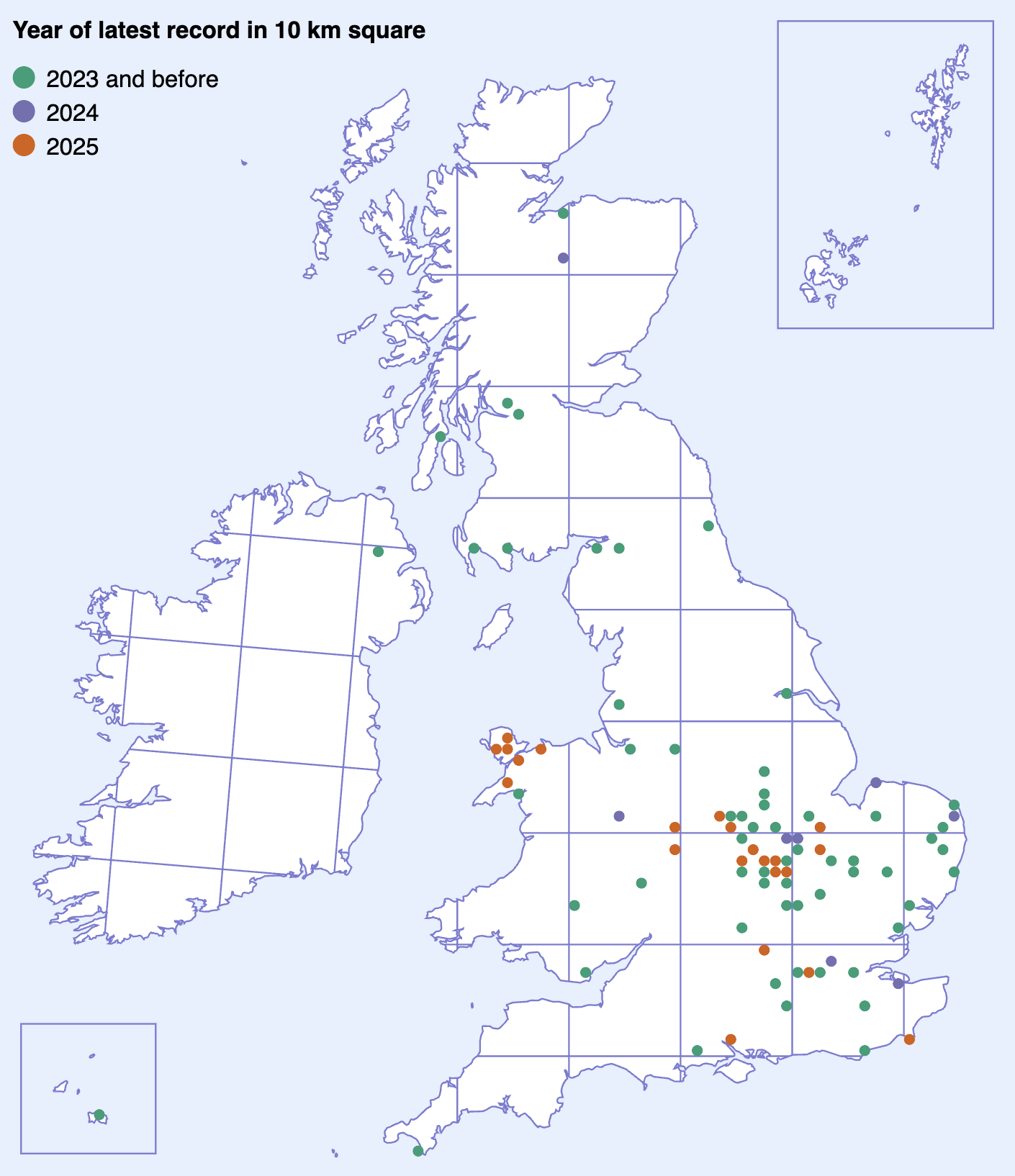
Microvelia reticulata
xxThere were 49 records this year which is up on last year. All the records were within range.
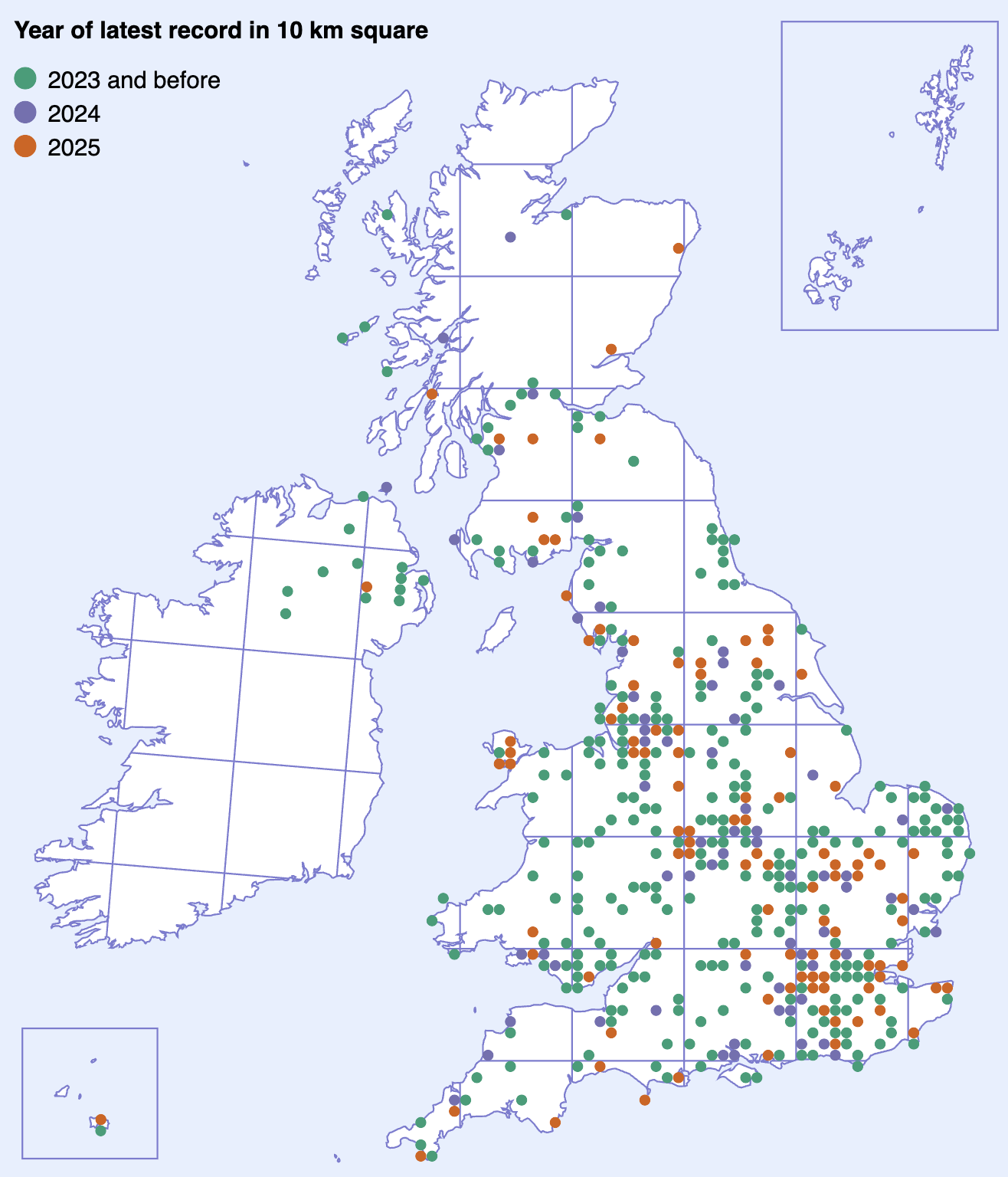
Nepa cinerea
This bug is easily identifiable to lends itself to be well recorded on iRecord with the most records this year of 161. They were well spread across the country in-line with it’s distribution.
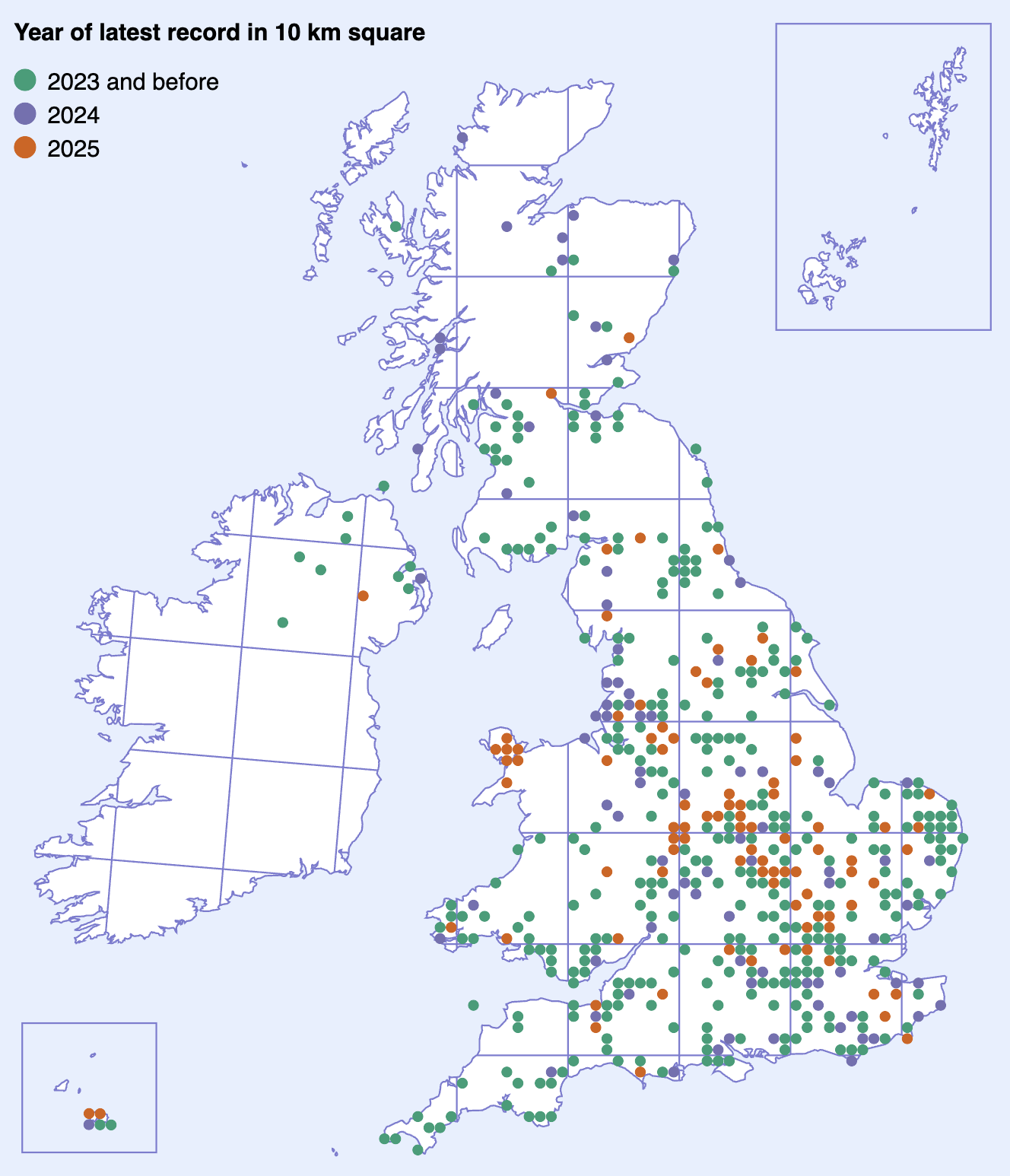
Notonecta glauca
There were 150 records this year and slightly down on last. It is ubiquitous across the UK so this map is perhaps showing a view more of recorder effort than it is true distribution.
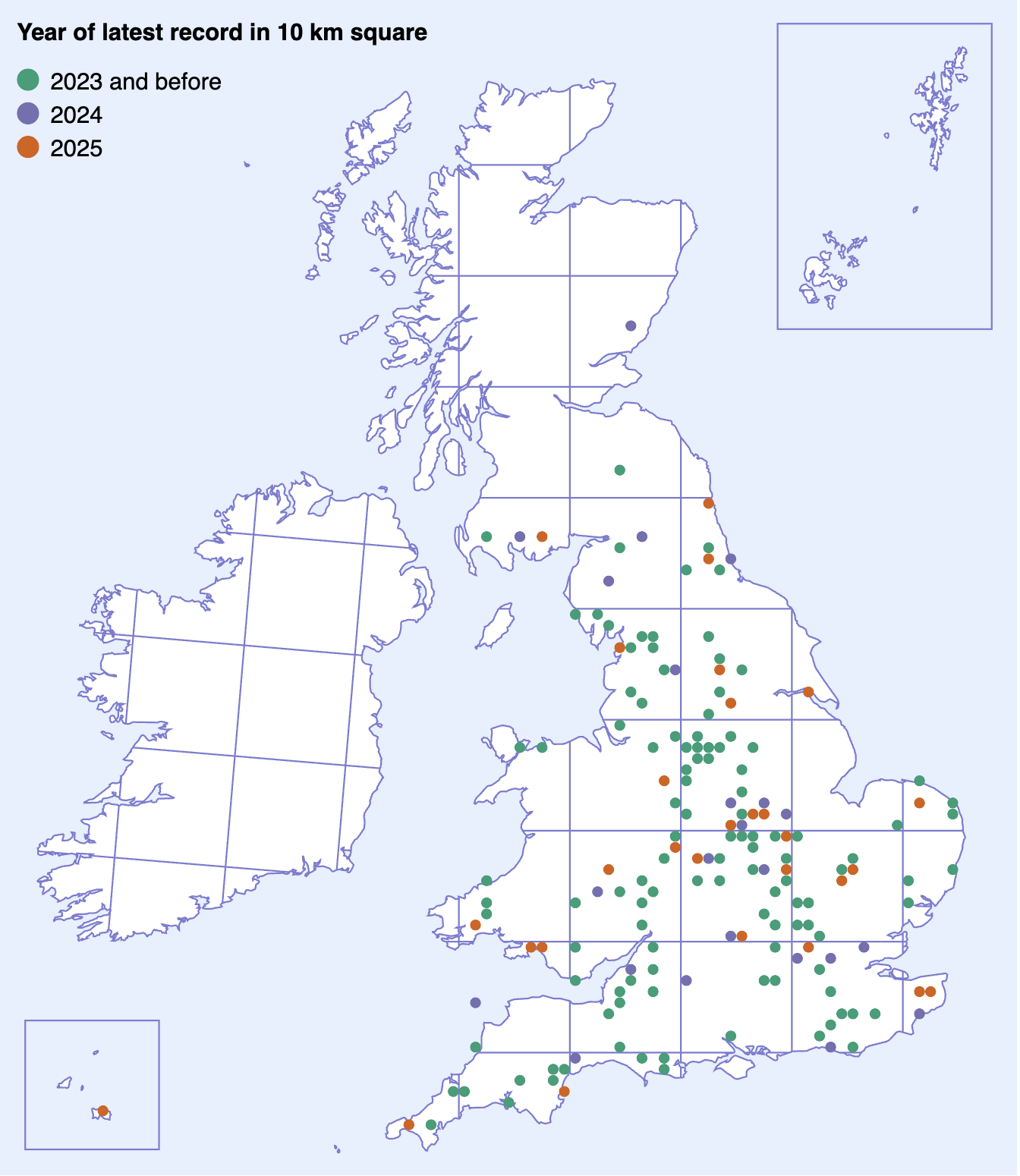
Notonecta maculata
There were 31 records this year slightly up on last. There were 3 more Northern records this year as it expands into and through Scotland.
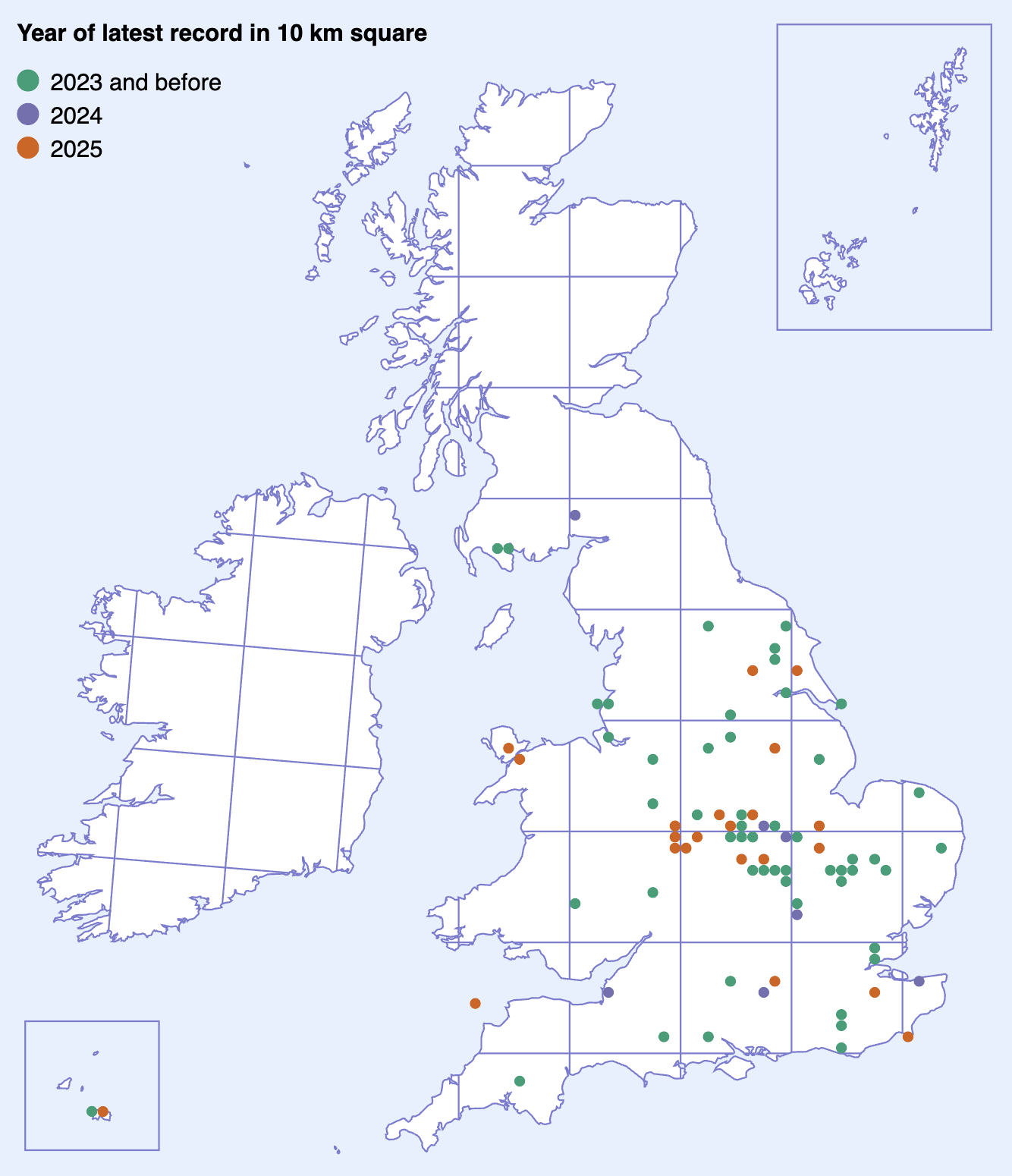
Notonecta viridis
There were 36 records this year significantly up on last year. There were good new records for Staffordshire this year where we hadn’t seen before.
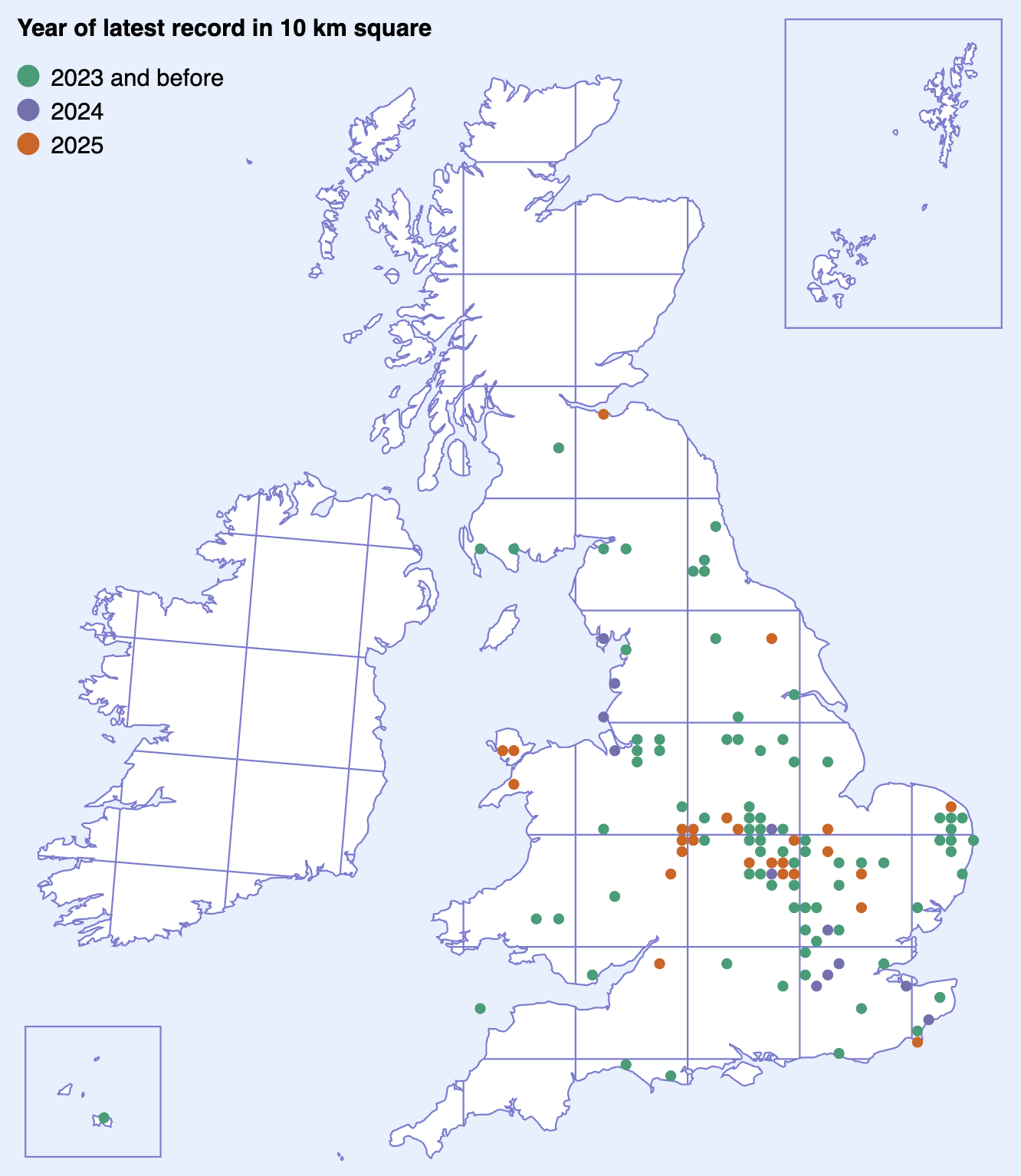
Plea minutissima
There were 67 records this year. A records from City of Edinburgh is the most northern record so far and shows it is expanding it’s rage northwards.

Ranatra linearis
There were 69 records this year the same as last. There were two Northern records this year filling in that Northern range expansion. There was also a record from Anglesey which completes the western expansion.
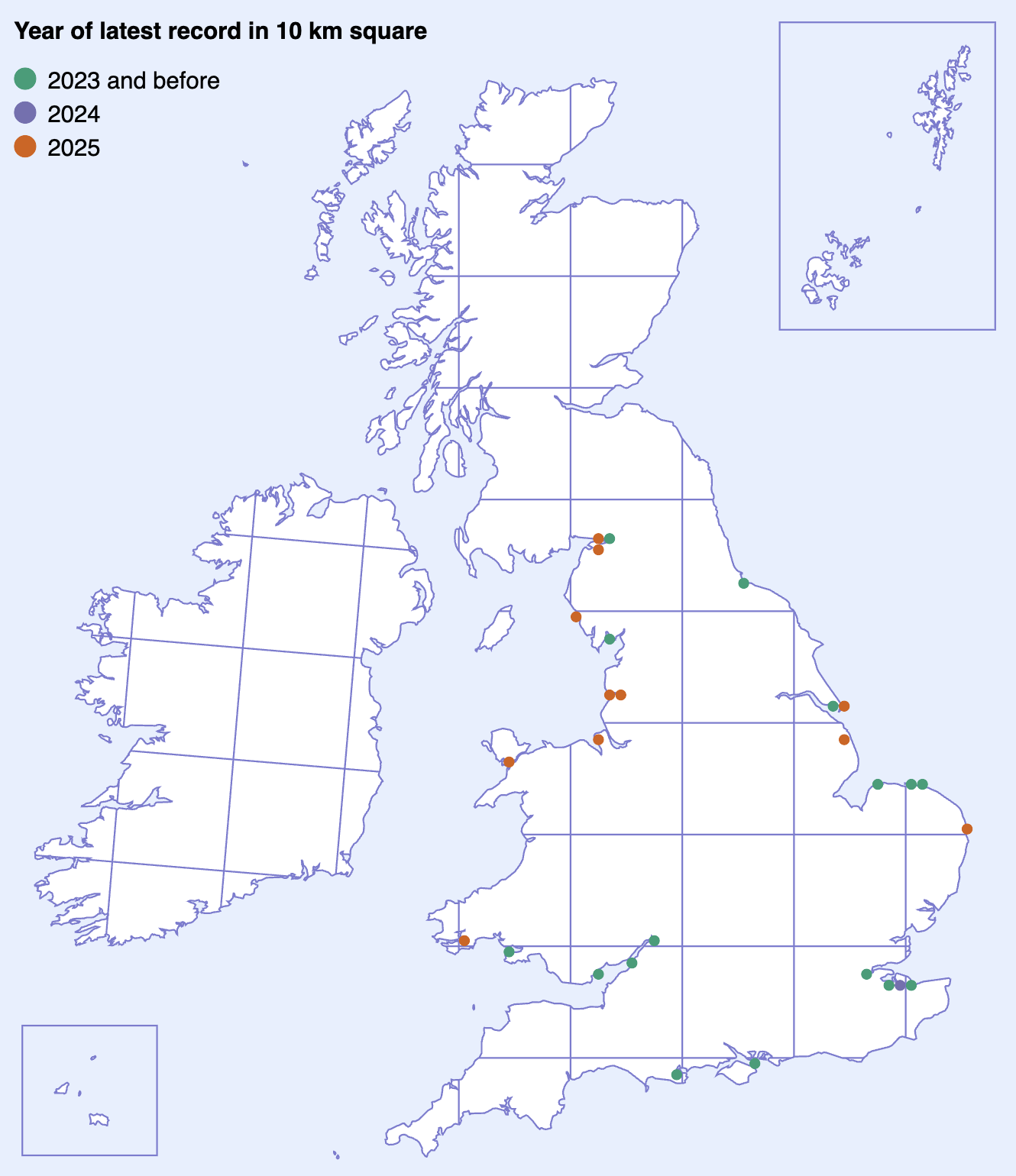
Saldula palustris
With 15 records it has had a good year for the number of records. They are all around the coast as you would expect.
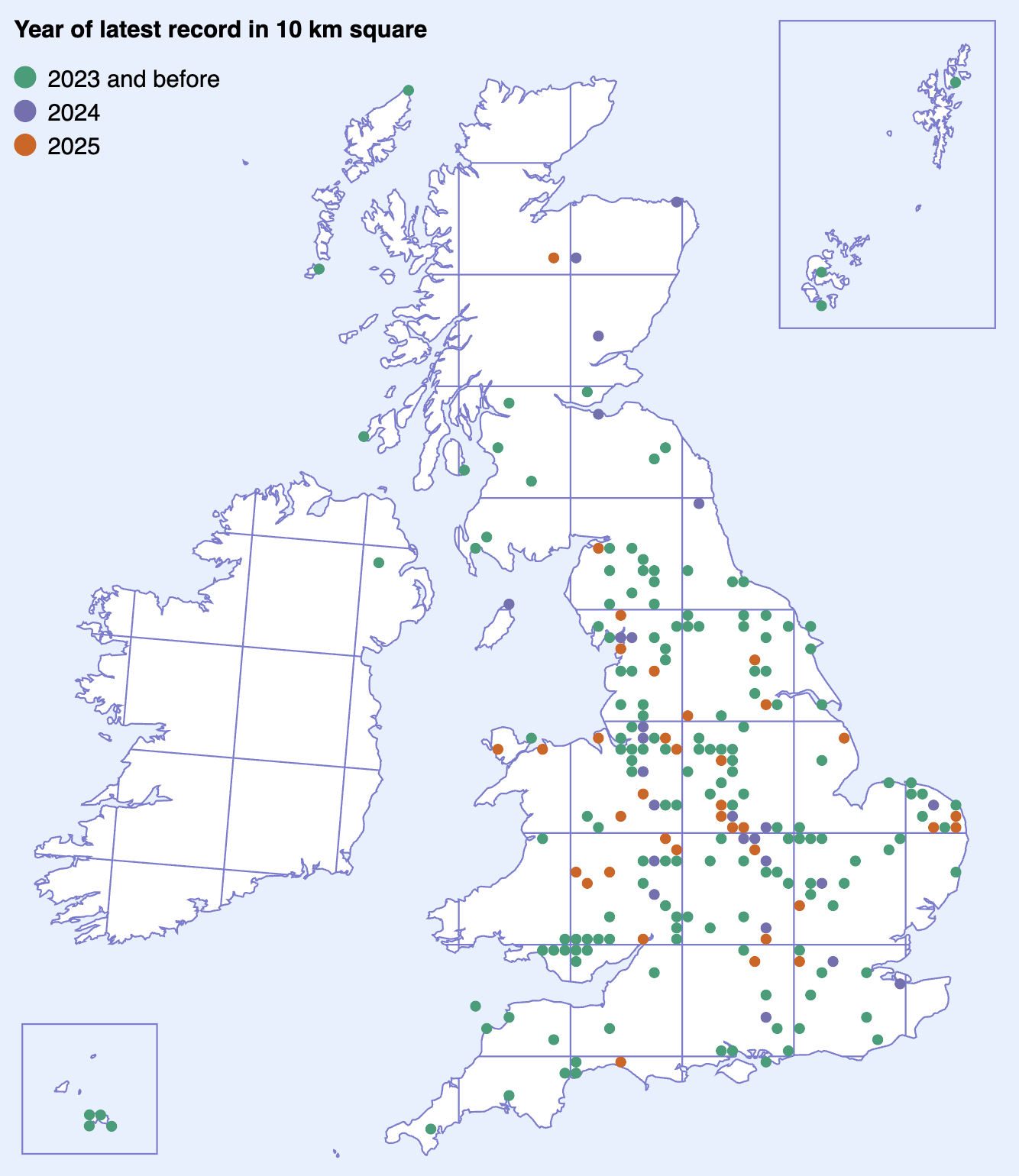
Saldula saltatoria
This is the commonest Saldula and we had 47 records this year which is similar to the last 8 years. There were records from the far North, South, East and West this year.
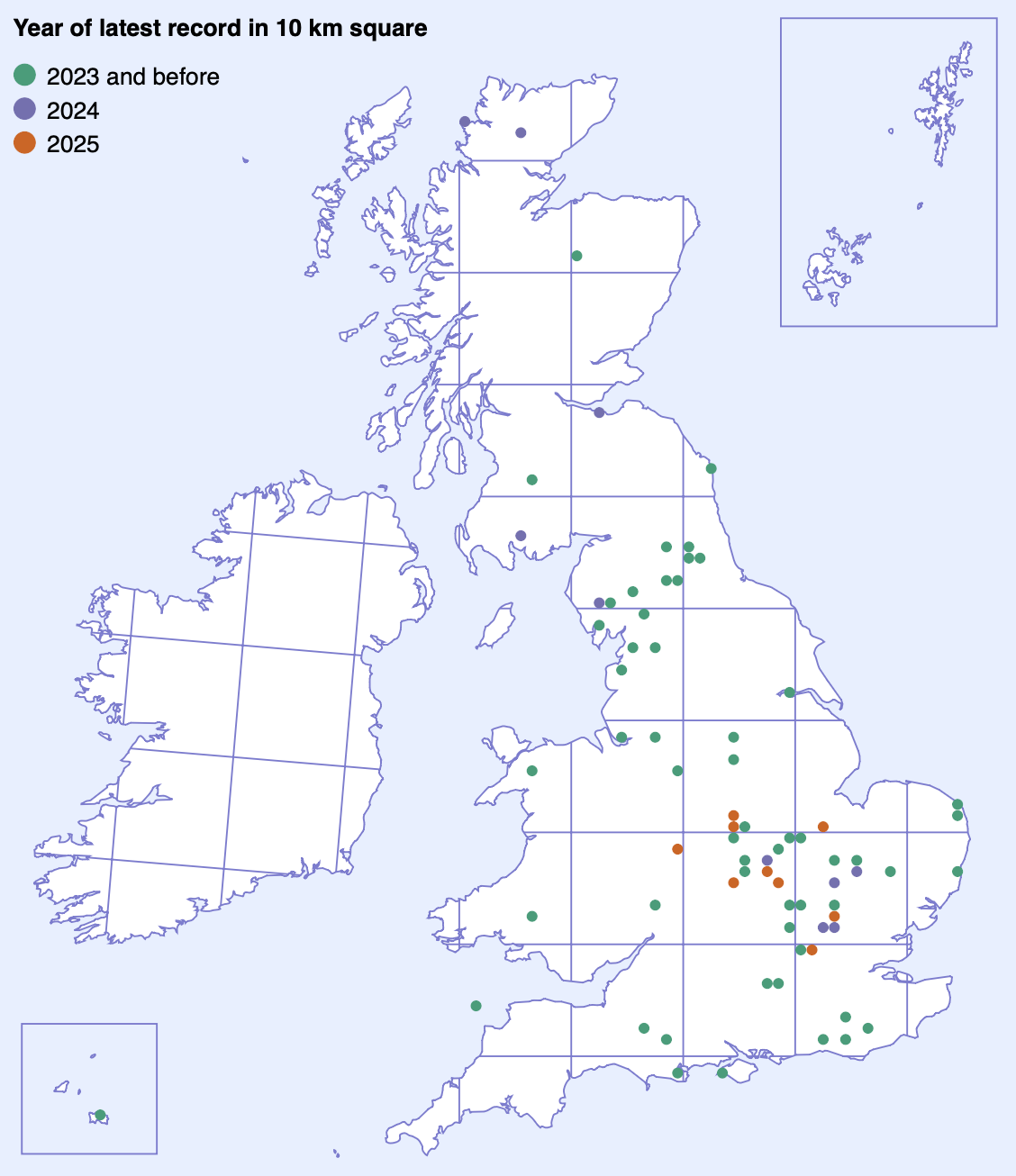
Sigara nigrolineata
There were 11 records this year which is slightly up on last year. Most of the records were taken from the middle of the country.
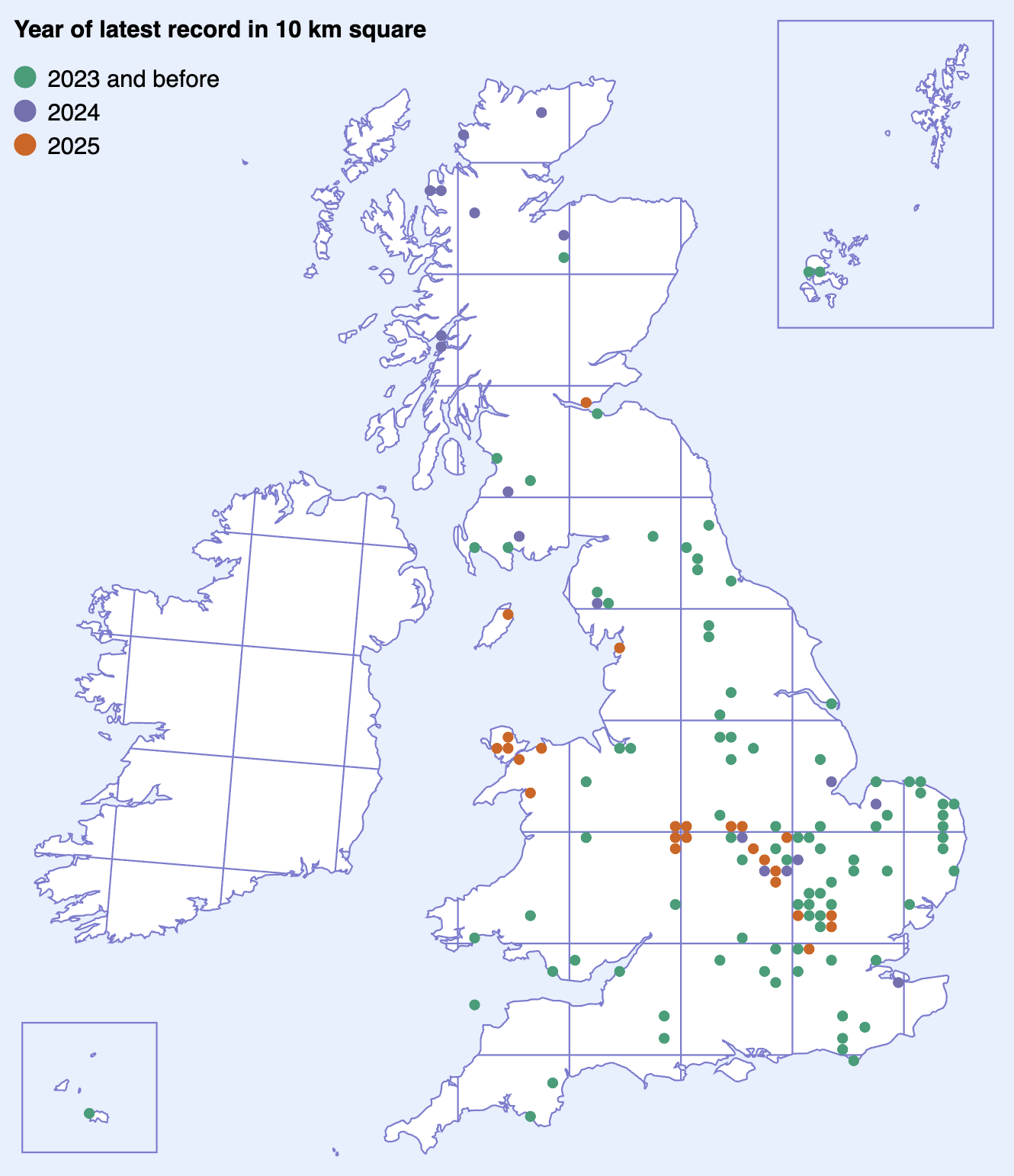
Sigara dorsalis
There were 40 records this year which is more than we have had before. Qite a number of those were from Anglesey but also from Staffordshire which historically there has not been many records.
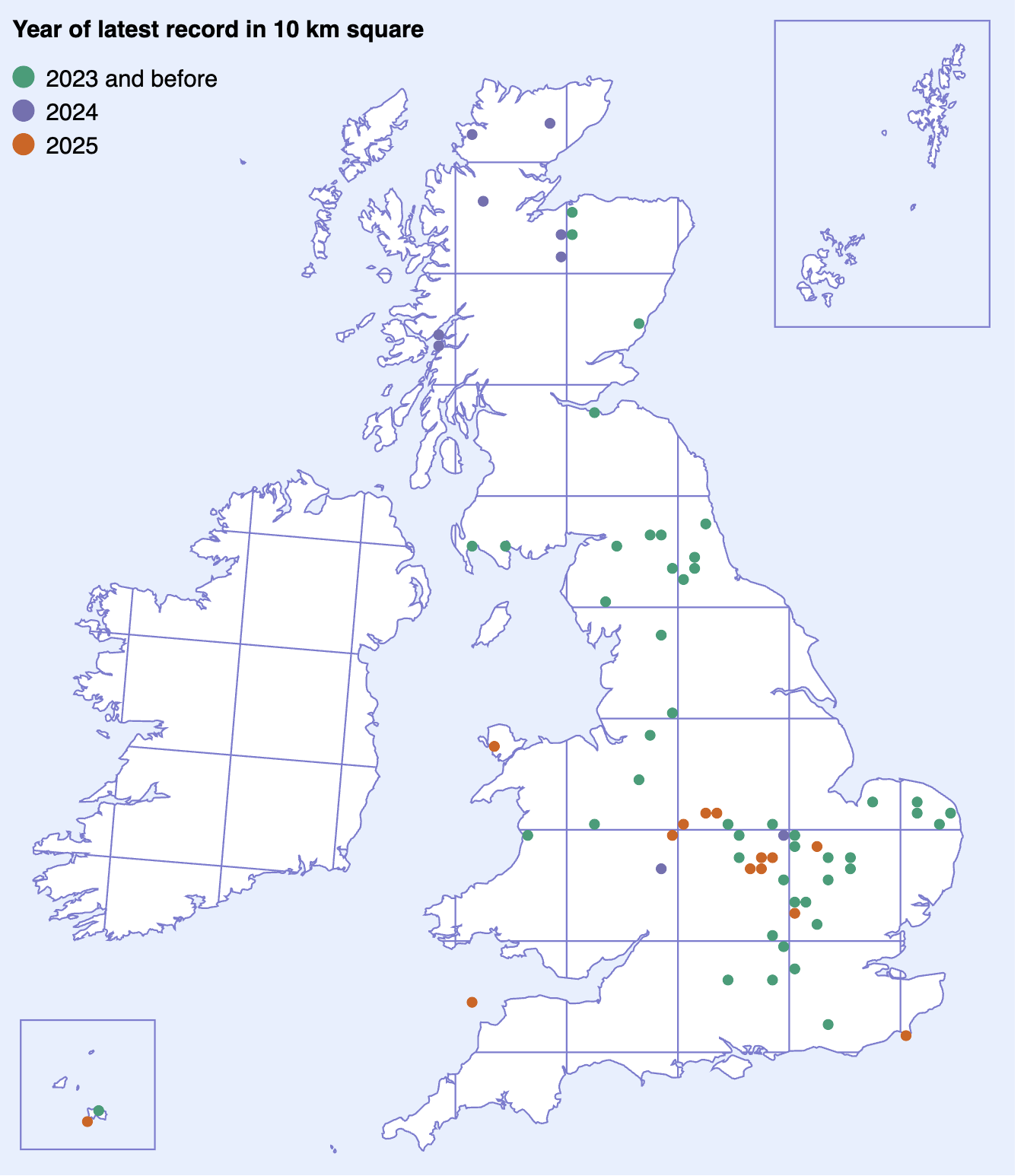
Sigara distincta
This year there were 20 records which is up on last year. Mostly these were within range in the ccentre of the country.
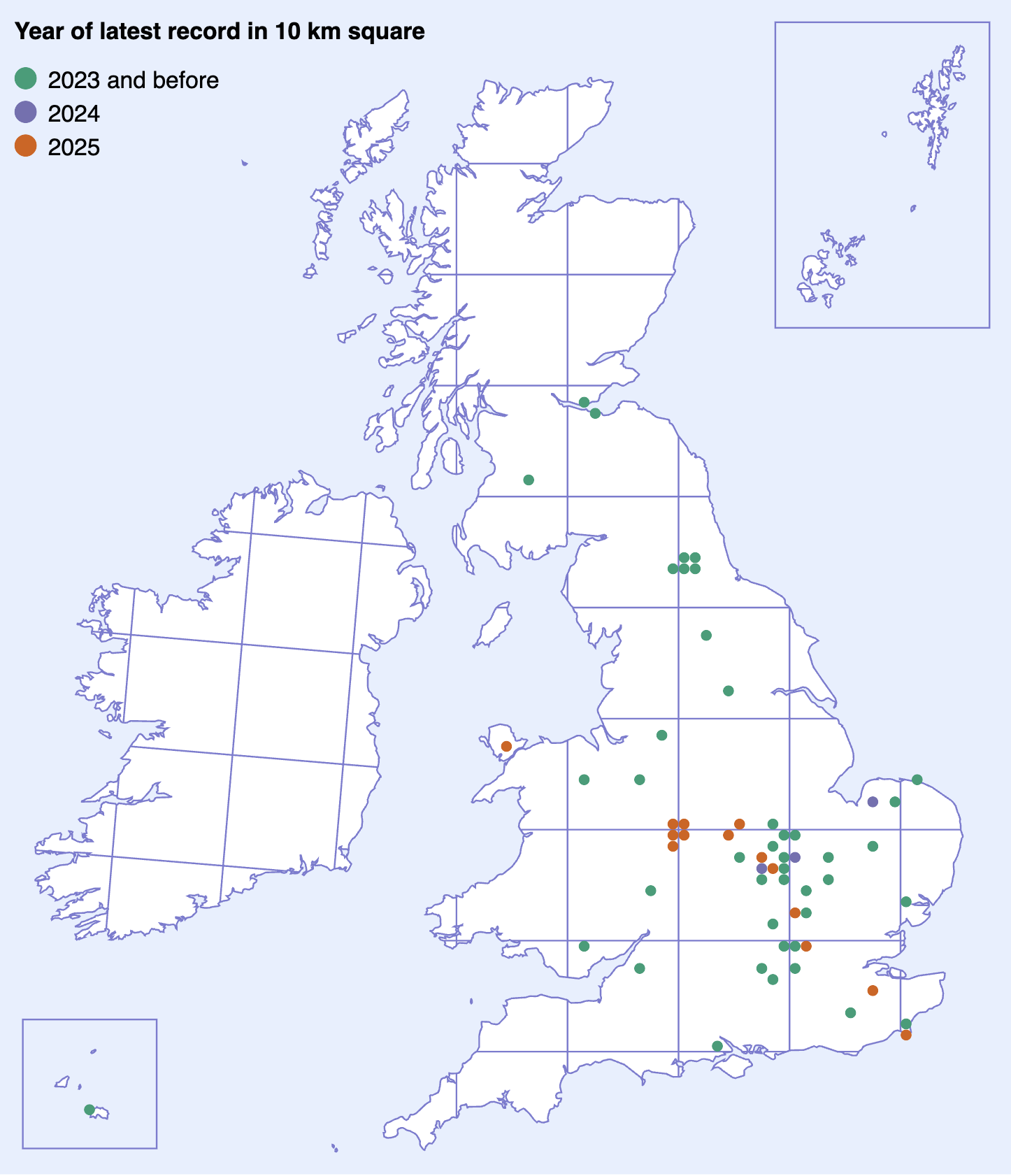
Sigara falleni
There were 20 records this year significantly up on last year. This used to be a common species across the country but there haven’t been that many recorded recently. Good to see some extensive recording in Staffordshire this year.
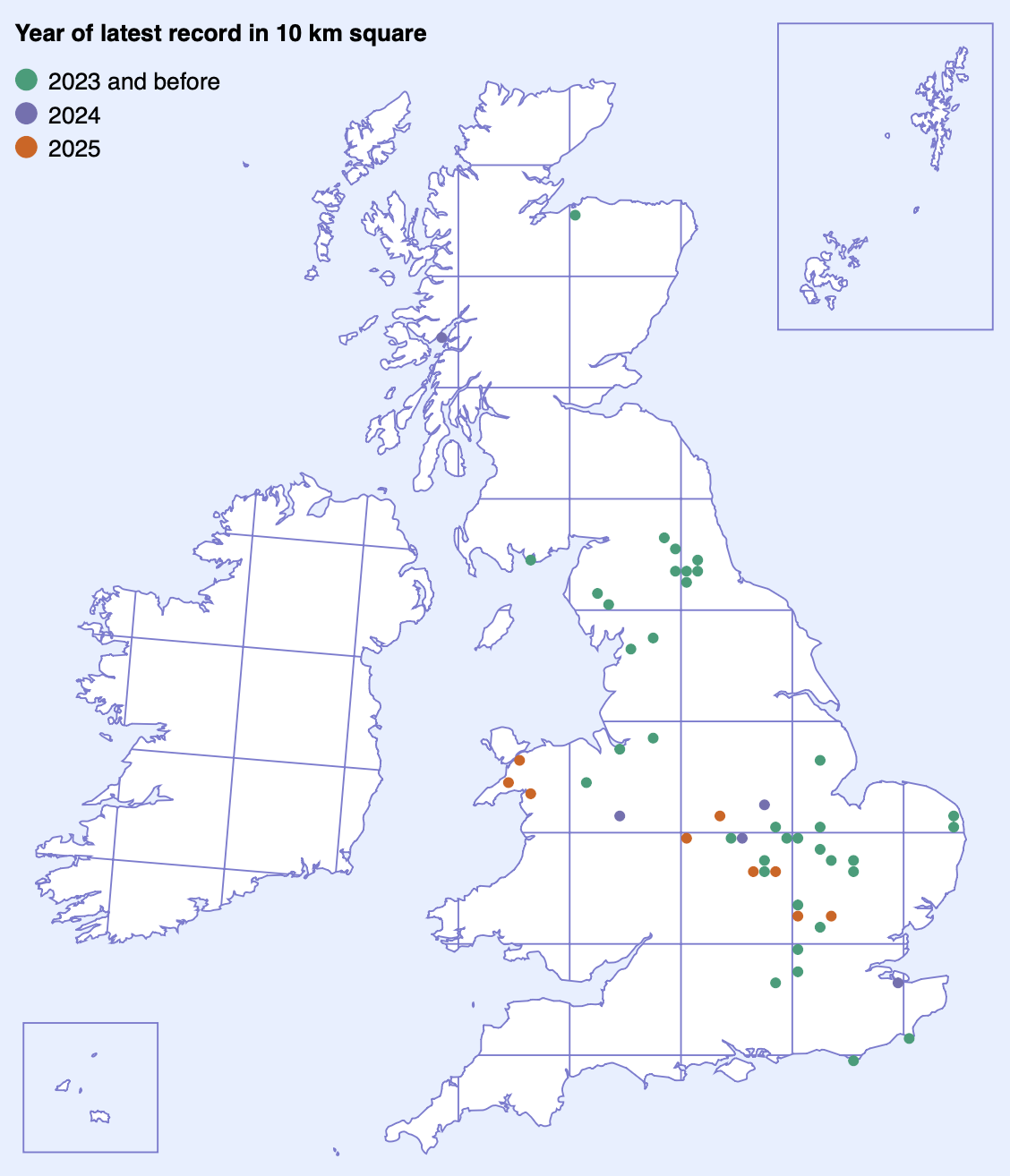
Sigara fossarum
There were 13 records this year up on last year. Good to see 3 North wales records this year slightly expanding it’s range in that area.
Sigara lateralis
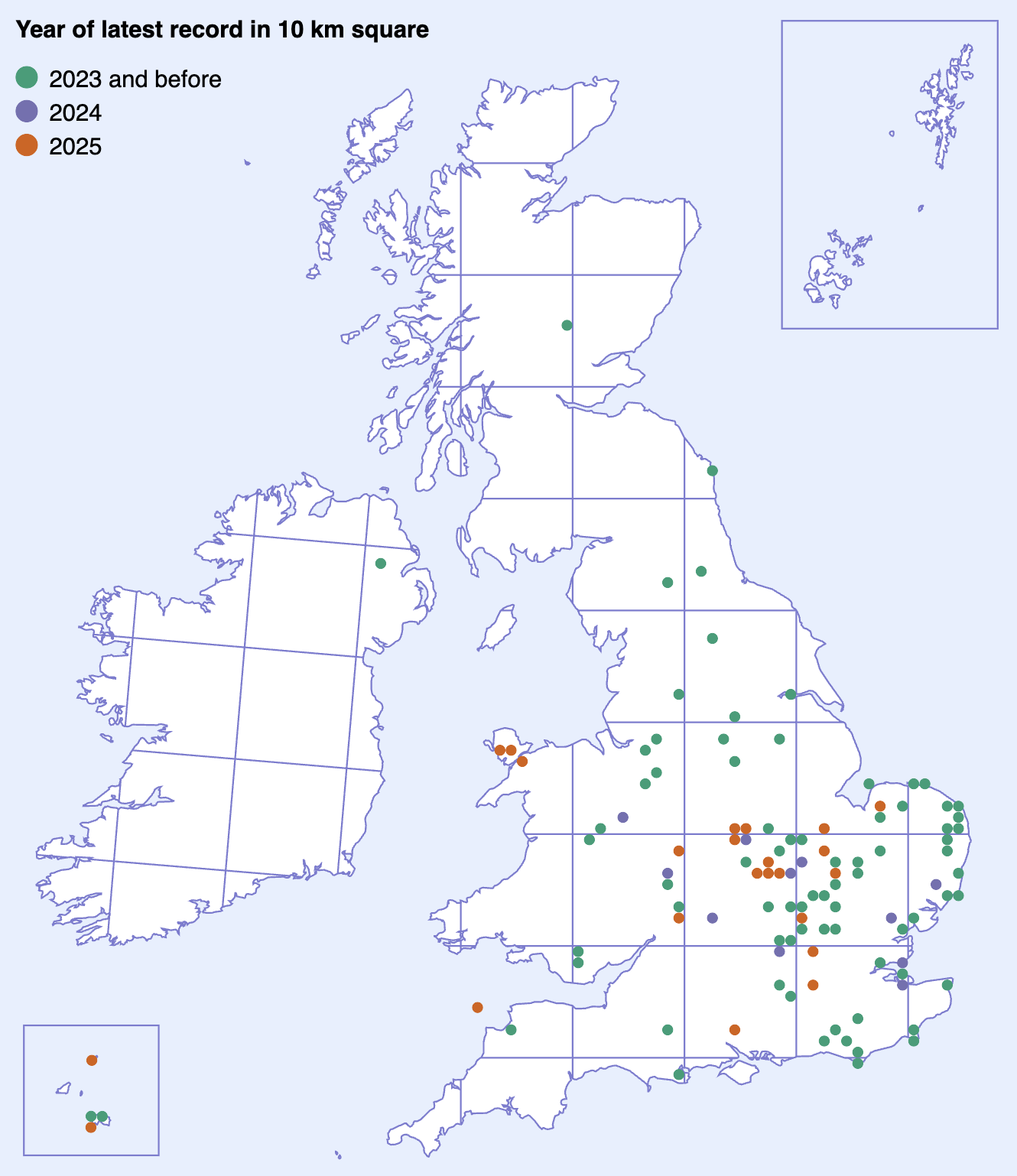
There were 33 records this year which is similar to the last 7 years. 4 records were from Bedfordshire, 5 records from Leicestershire and 5 records from the Isle of Lundy.
Velia caprai
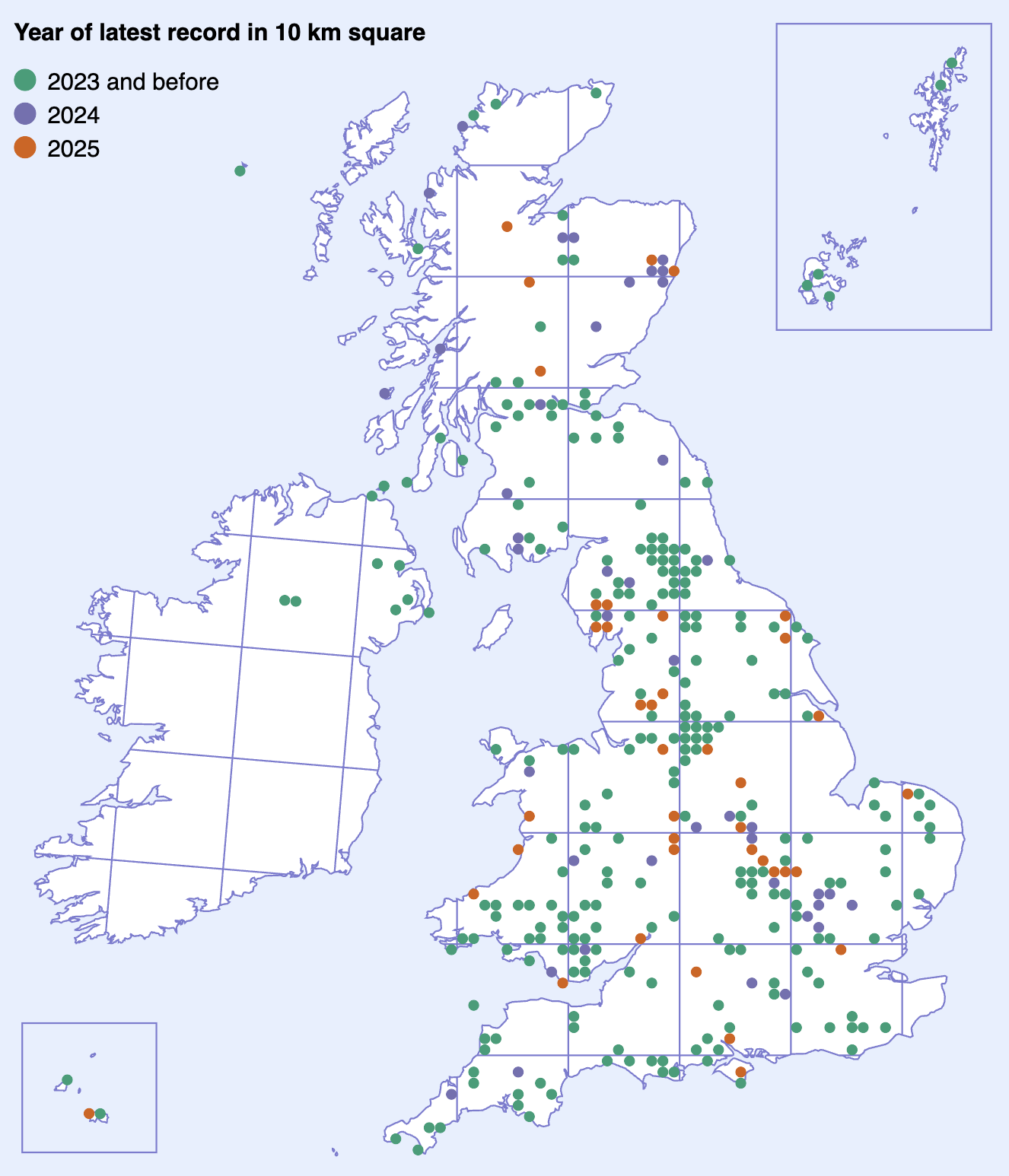
There were 50 records this year. This has been recorded consistently across the UK for the last 10 years on iRecord. This year there were a good number of records from the North-West and also Scotland.
 Aquatic Bugs